Northern Lights Trips
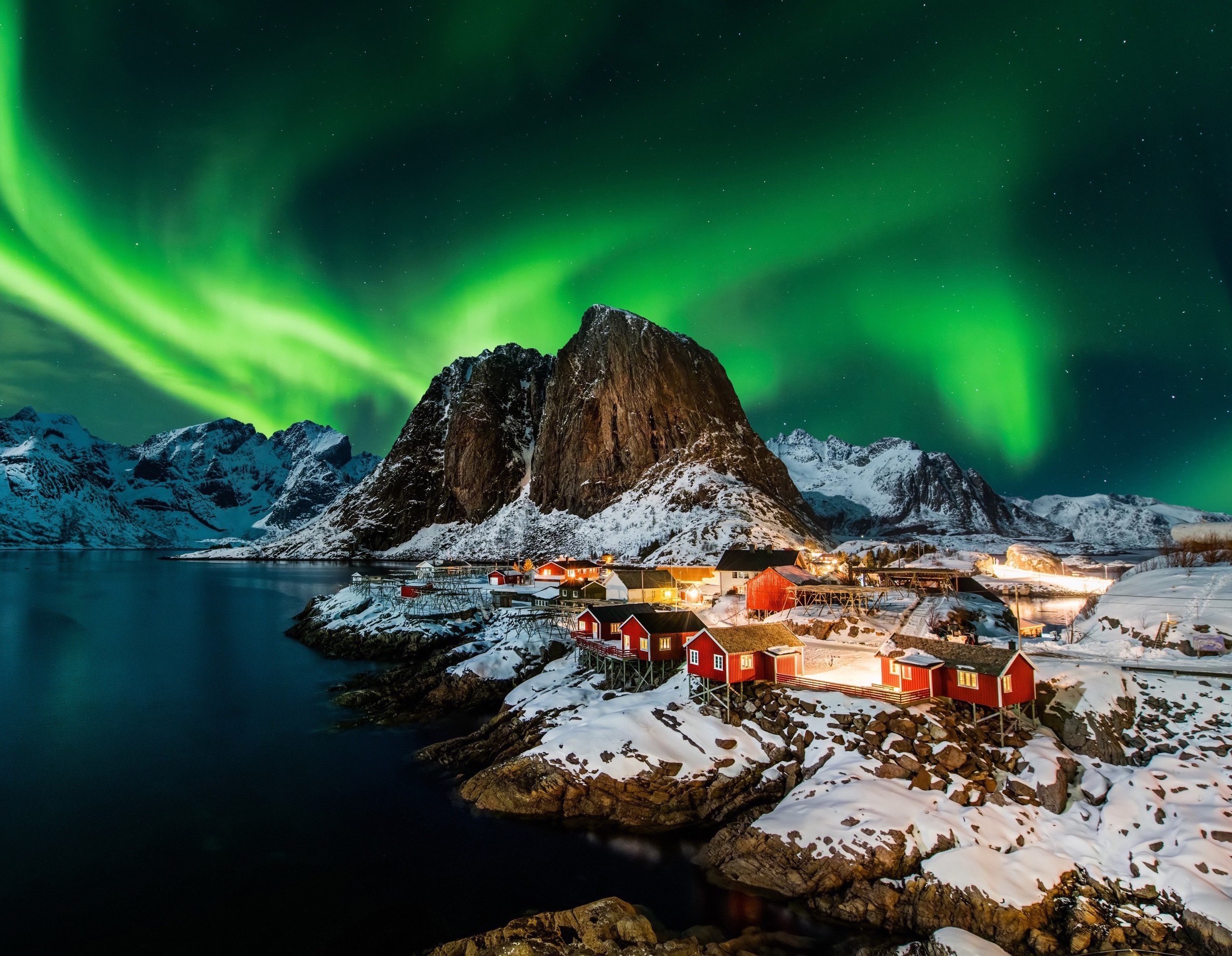
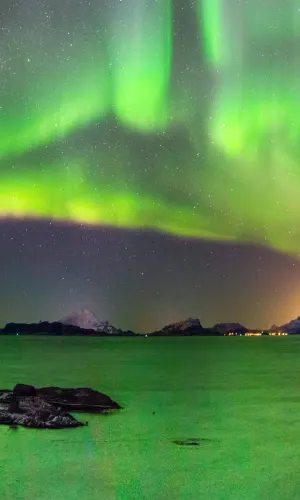
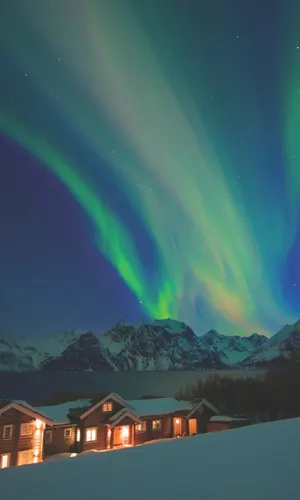
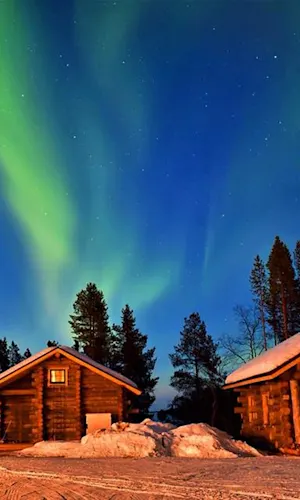
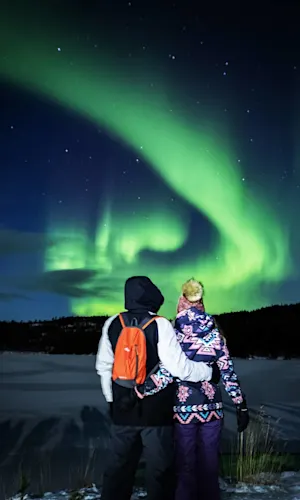
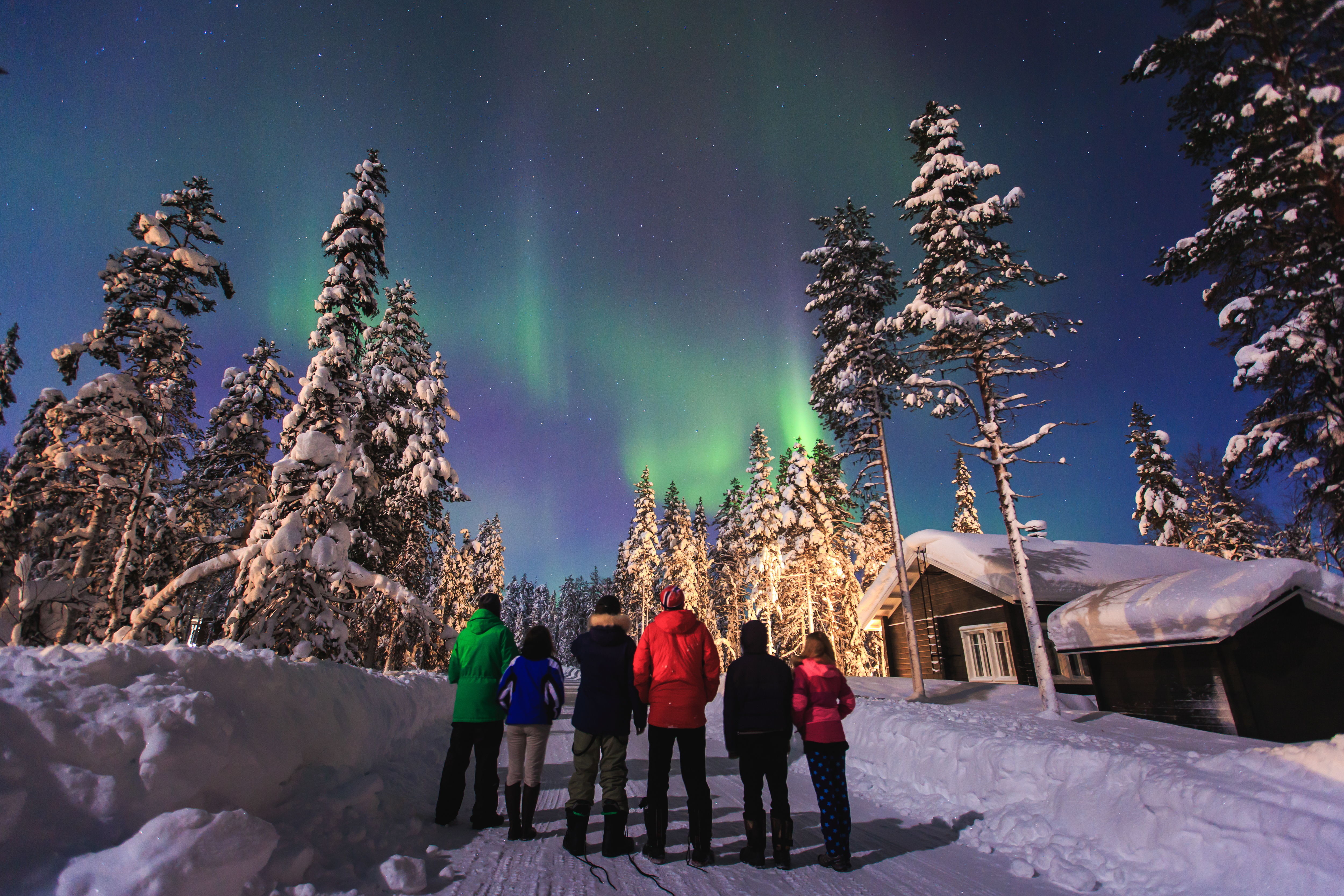
These Northern Lights trips are built around the Aurora Borealis, the natural displays of green, white and violet light that appear most often in a ring around the Earth's geomagnetic pole. The zone where the aurora is most active, the auroral oval, sits at high northern latitudes and takes in the far north of Norway, Sweden and Finland, along with Iceland, southern Greenland and Svalbard. This is our specialist region, and we design our trips to give you the best chance of seeing the lights for yourself.
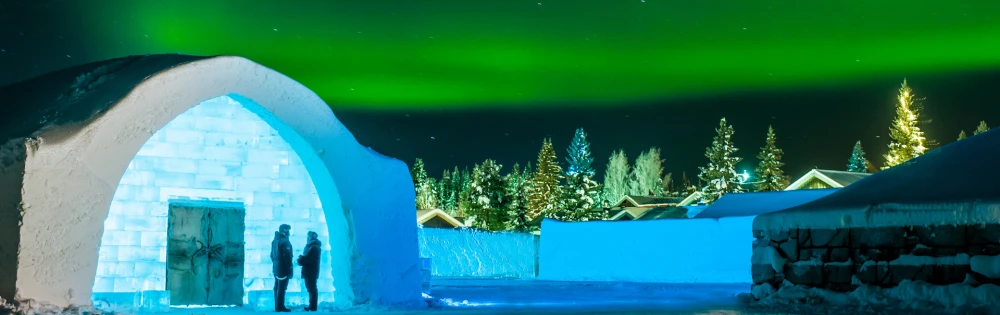
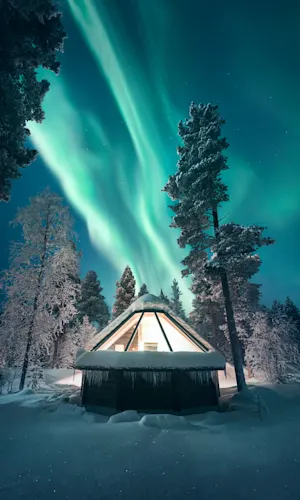
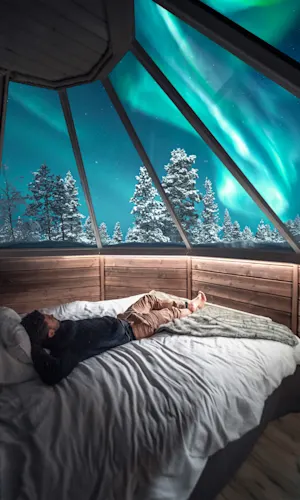
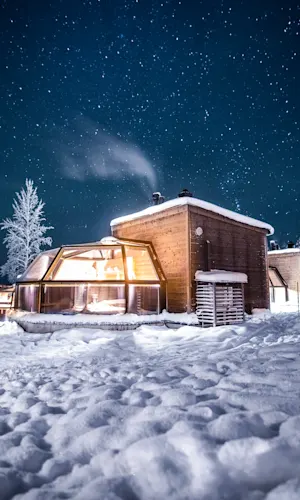
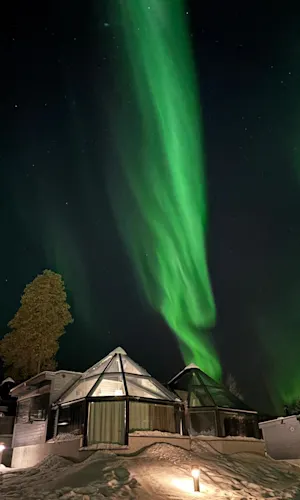
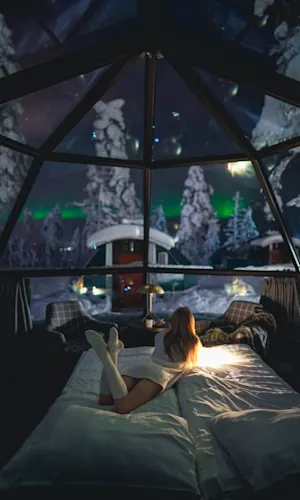
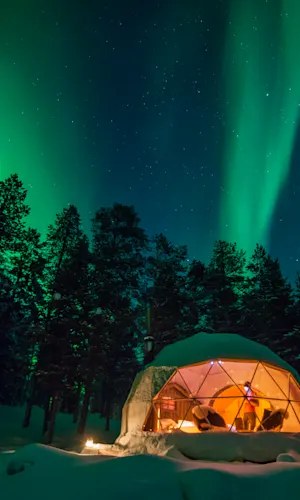
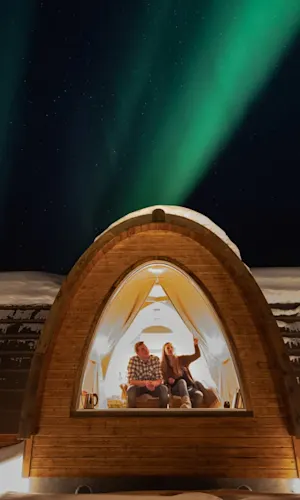
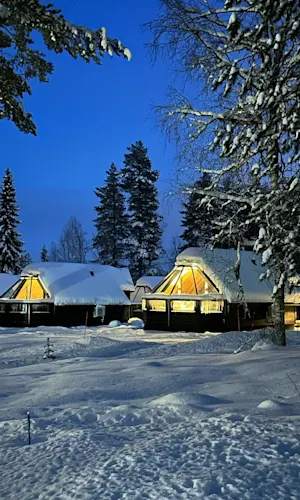
Seeing the Northern Lights is high on many travellers' lists, and part of the appeal is that it takes some effort. The aurora is unpredictable and never guaranteed, so seeing it depends on careful planning and positioning: several nights in the right place, under dark skies, with the flexibility to move to clearer conditions. Some of our stays are built for exactly this, including glass igloos and domes angled at the sky so you can watch from bed.
Browse our Northern Lights trips below, and read on beneath them for advice on when to travel, where to base yourself and how to plan your trip. For more on timing, see our guide to when to see the Northern Lights.
Destination
Season
Duration
Tour Standard
















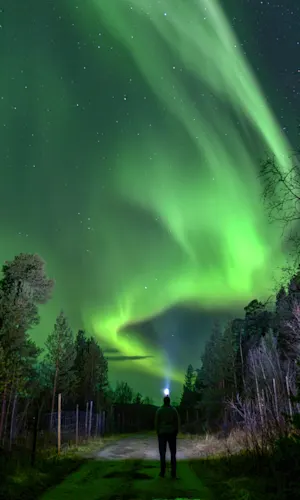
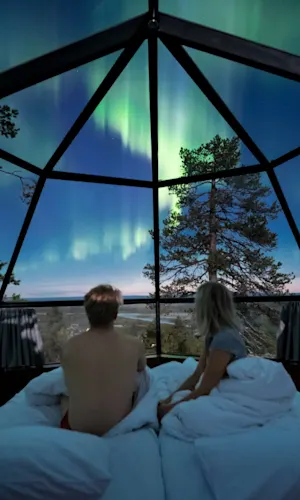


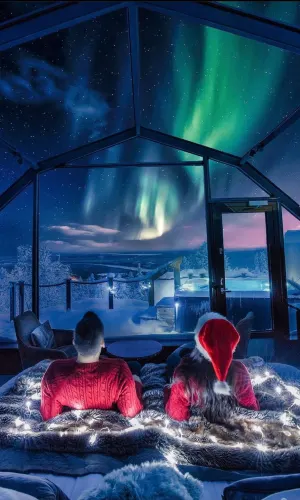


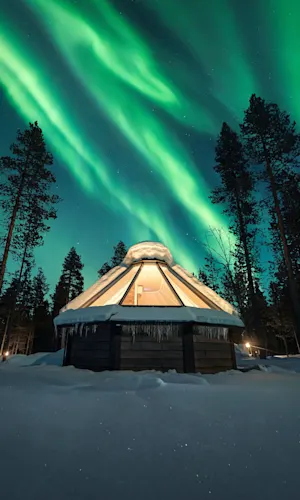


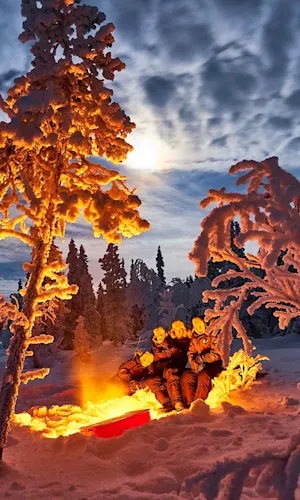
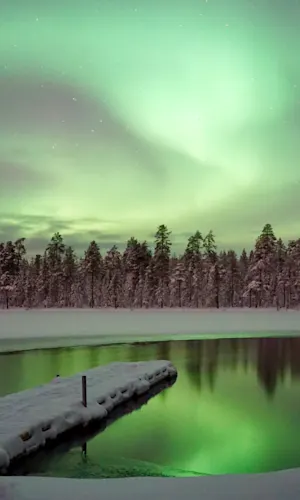

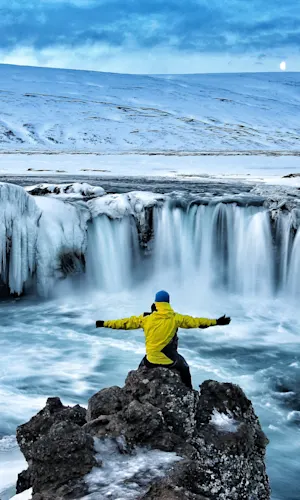



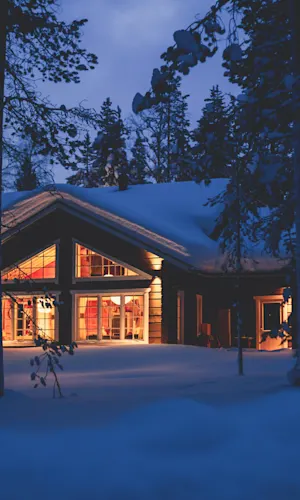
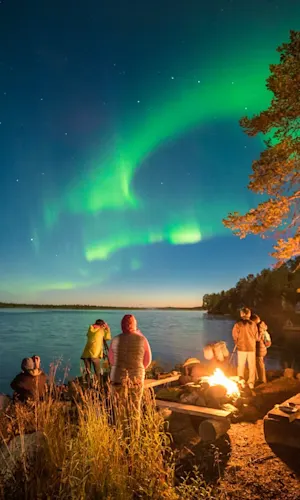

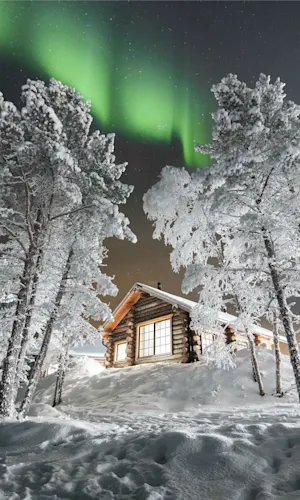

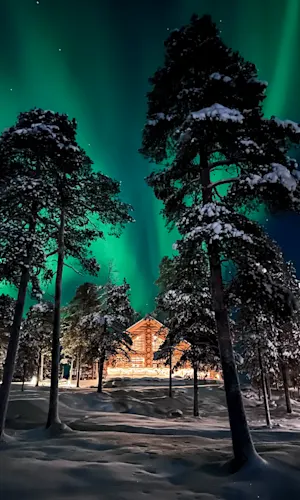




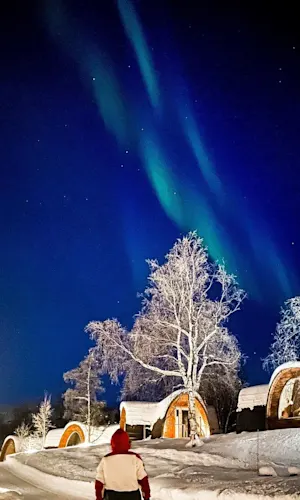



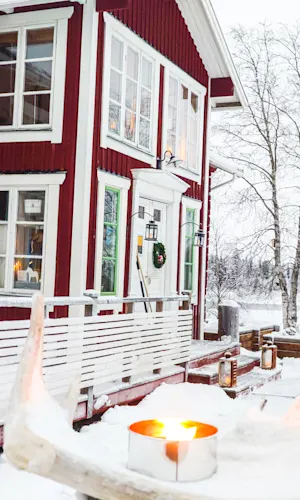

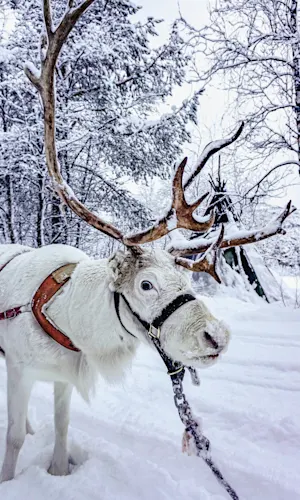
How can I travel to the Northern Lights region in Northern Europe?
Northern Lights tours typically take place above the Arctic Circle, across the region we specialise in. Flying in the Nordic region in winter is safe and convenient, and winter conditions rarely prevent flying or landing: snow and ice are routine in the far north, so airports are well prepared, de-icing is standard, and pilots are experienced in all weathers. Every airport in the region has a public transport connection to the nearest town.
Usually your first step is a flight to Helsinki, Stockholm or Oslo, and then either a connecting flight to a smaller town in Lapland near your accommodation, or a train north. You can, for example, take an overnight sleeper train from Helsinki to Rovaniemi, arriving on the Arctic Circle in the morning. It's a characterful way to travel, though not one for a tight schedule.
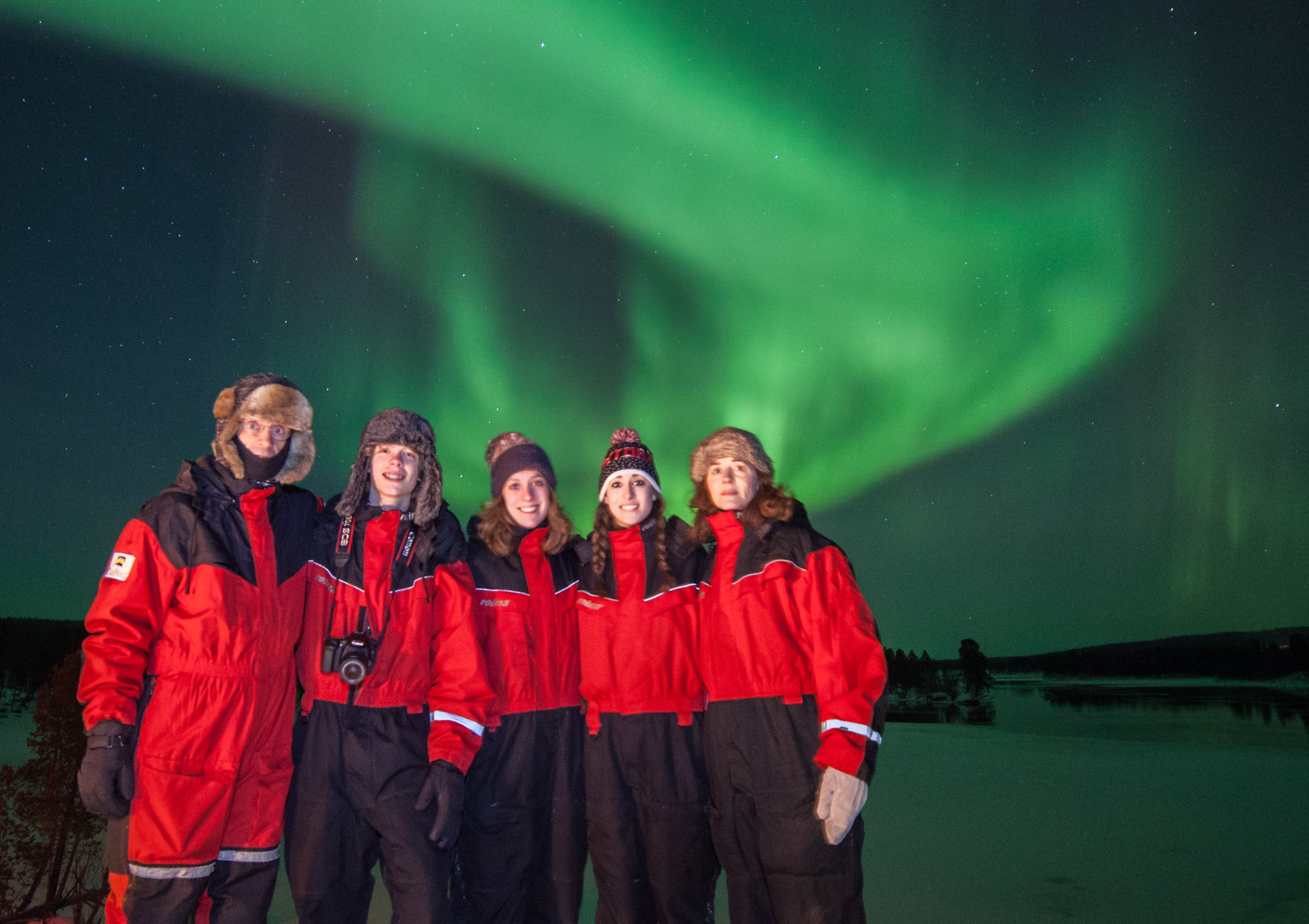
Image: Aurora Village
When can you join a Northern Lights tour?
Our Northern Lights tours run from September to April when the nights are darkest and coldest. If you can travel across those months, earlier or later in the season is worth considering, as you gain longer daylight hours for activities.
When should you book a Northern Lights tour?
Northern Lights travel has been especially popular lately, with the solar maximum producing some of the strongest displays in over a decade. We'd suggest booking three to six months ahead to secure the best of the region. Many hotels have built accommodation designed specifically for aurora viewing, such as the glass igloos in Ivalo and Levi. You can browse these on our glass igloos and domes page.
We'd suggest planning your itinerary with a few Northern Lights excursions built in, such as snowmobiling or minivan aurora tours, then adding more once you've arrived and can see how conditions are shaping up. Most operators keep some day-to-day flexibility, since the weather makes a real difference to your chances.
Are there day or evening tours to see the Northern Lights?
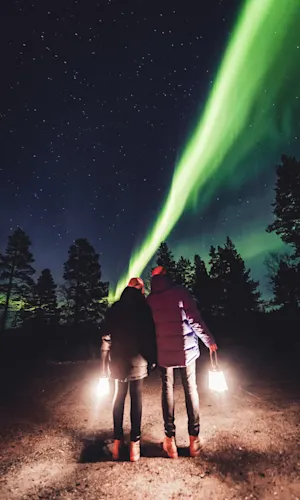
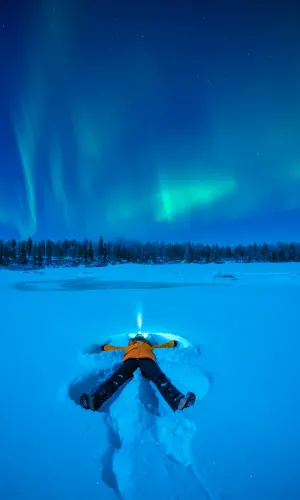
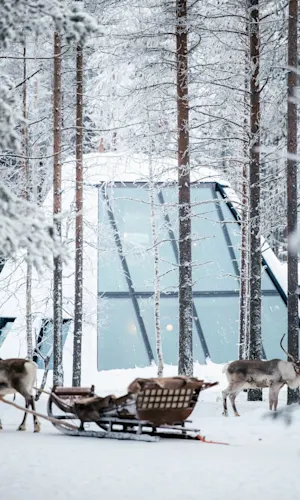
Yes, there are many ways to search for the aurora within a tailor-made trip. For a Northern Lights tour in Norway, Sweden or Finland, you can base yourself in one of the towns above the Arctic Circle and join evening outings that go looking for the lights. Worth knowing that aurora hunting is a late activity: the lights are usually at their most active between about 9pm and 2am, so these outings run late into the night. The guides check the forecast and the aurora-prediction sites each evening and drive to wherever the sky looks most promising, with a warm van and hot drinks to keep you comfortable during the search. Activity-based options such as snowmobile trips and reindeer sledding, with an aurora search built in, run in most of our winter locations.
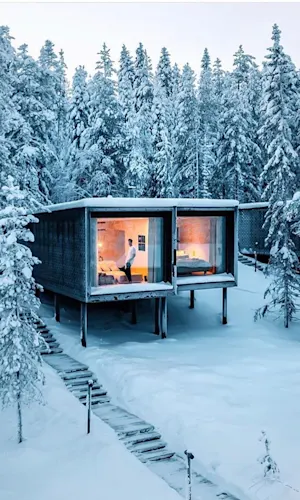
Much of the region's accommodation is designed around comfortable aurora viewing, so you don't always have to head out to see the lights. Glass-roofed cabins and igloos let you watch the sky from bed, and many lodges and hotels are set well away from artificial light with the aurora in mind. You can read more on our glass igloos and domes page.
Are there group tours to see the Northern Lights?
Yes, we run several small group tours built around the aurora, travelling above the Arctic Circle across Norway, Sweden, Finland and Iceland through the winter season. Led by an experienced tour leader with a set itinerary, they suit travellers who prefer company and a planned pace, with the aurora searches, activities and distinctive stays built in. Browse the current departures on our winter small group tours page.
Can you predict whether I'll see the Northern Lights?
There are two kinds of aurora prediction: statistical and real-time. Statistical forecasts draw on years of observations at different latitudes, telling you the general probability of the aurora appearing across the year.
According to the Finnish Meteorological Institute, in Northern Lapland (the Kilpisjärvi-Utsjoki area) the Northern Lights appear on around three clear nights out of four, provided the sky is clear enough. On the Arctic coast of North Norway, near Tromsø, they can be seen on almost every clear night. Even in southern Finland, around Helsinki, they appear, but far less often, roughly once a month. Because the frequency depends on latitude, it's worth staying in the aurora zone for several nights to let cloud pass, and remembering to look north. In the summer months you can't see the aurora at all, as the midnight sun keeps the sky too bright. The best window each night is generally between 9pm and 1am.
Real-time forecasts work differently, drawing on space-weather monitoring from ground stations and satellites. When these instruments detect certain changes, a geomagnetic disturbance can be expected within a few hours. Their accuracy is limited, though: unlike ordinary weather, the aurora can't reliably be forecast days ahead, because the processes linking the sun to the near-space around Earth aren't yet fully understood.
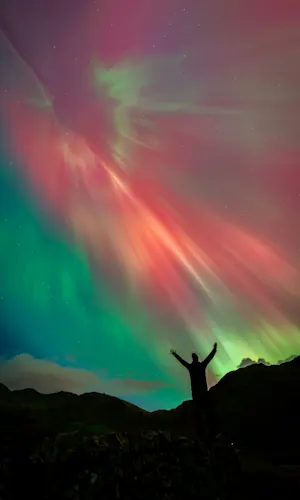
The aurora comes in many shades and strengths. Some nights bring bright, active displays; others only a faint, hazy green that's hard to make out. When the Earth's magnetic field is strongly disturbed, the lights can spread across much of Europe for a few hours.
Ready to plan?
See our full range of Northern Lights tours, or read more about when to see the Northern Lights.