



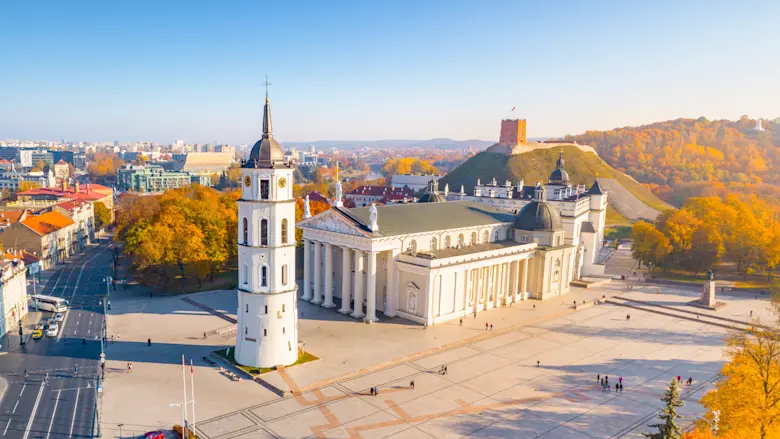
Off-Season Magic in the Baltic Countries: Estonia, Latvia & Lithuania
Explore the quiet charm, cultural depth, and seasonal beauty of the Baltic States of Estonia, Latvia, and Lithuania.
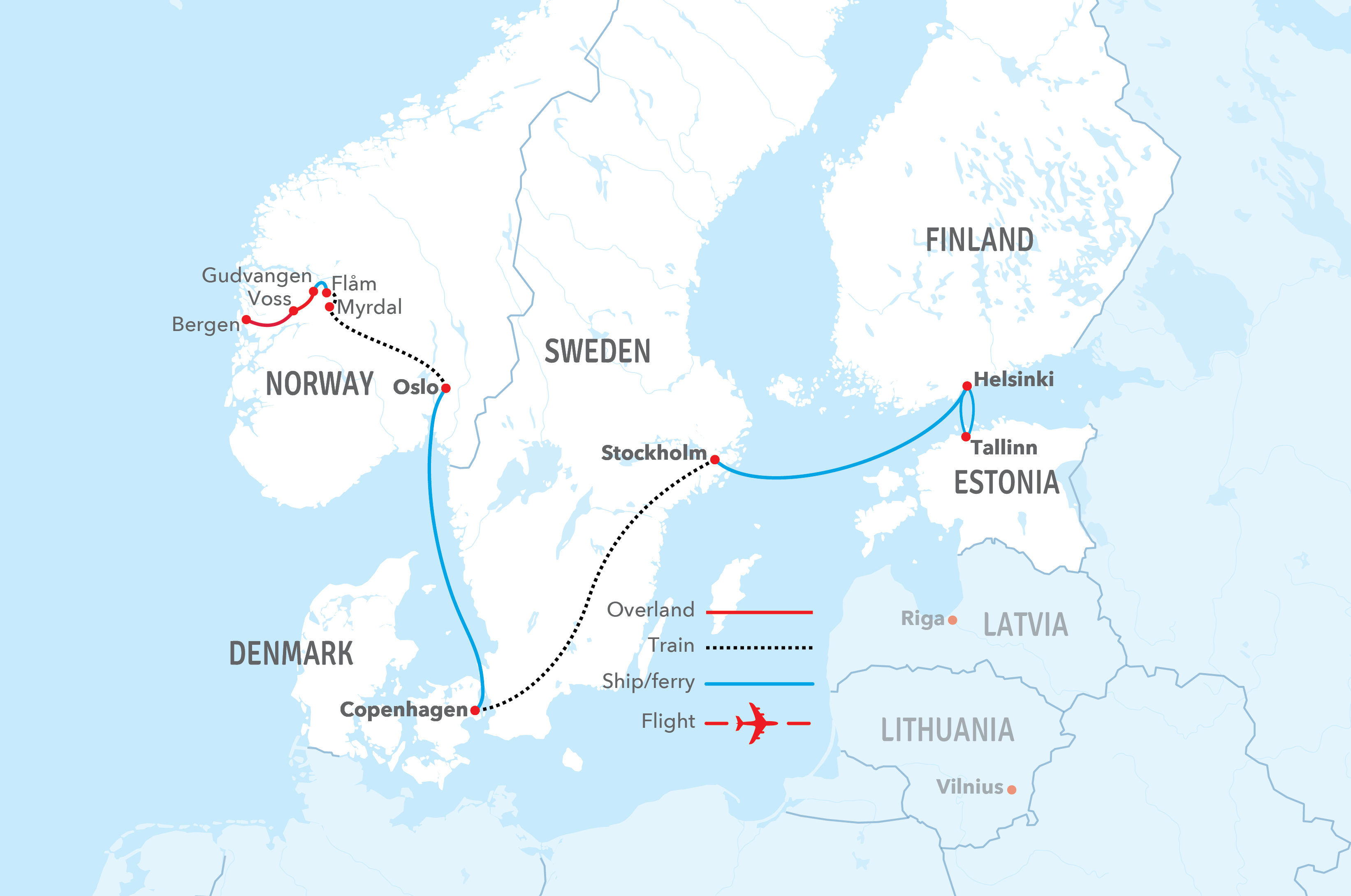
13 days | Independent tour | May-Nov | Bergen to Helsinki
Classic Standard – This is a new itinerary that has the same thoughtful route design, trusted local partnerships and carefully paced experiences that define our travel styles, with accommodation centred on comfortable 3-star hotels in convenient locations.
Experience the very best of the Nordic capitals and Norway's dramatic fjord and mountain scenery on this classic 13-day self-guided tour, travelling by rail and local ferry with ample time to savour both the landscapes and the vibrant modern cities of Scandinavia.
Highlights include guided walking tours in Oslo, Copenhagen, Stockholm, Helsinki and Tallinn, a day trip to Tallinn, two spectacular overnight voyages from Oslo to Copenhagen and through the magnificent Baltic Sea archipelago to Helsinki, and the iconic Norway in a Nutshell® by Fjord Tours.
This self-guided journey departs any day of the year, giving you the flexibility to discover five Nordic countries at your own pace.

As a Certified B Corporation, 50 Degrees North has designed this itinerary using handpicked local hoteliers and suppliers who share our ethos of delivering services and activities of high social and environmental standards.
Through our Climate Action Plan, we measure our carbon emissions each year and set goals to reduce them. But our responsibility does not end when the journey does. A share of our annual profits goes to our Impact Fund, supporting conservation, restoration and the communities we work in.
Local bus, trains and boat/ferry.
Arrive in Bergen, the gateway to the fjords. Make your own way to the hotel. Depending on your arrival time in Bergen, we recommend visiting the Hanseatic harbour ‘Bryggen', Fløibanen Funicular and the Fish & Flower market.
After breakfast you depart from Bergen by train. Today you travel from Bergen to Oslo on one of Norway's most celebrated scenic journeys, on Norway in a Nutshell® by Fjord Tours.
For a full explanation of how this iconic route works, read our Norway in a Nutshell® by Fjord Tours Explained guide.
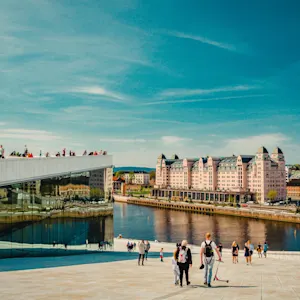
The Norwegian capital has a great deal to offer the discerning traveller, and you have two full days to discover the city. Uncover the true spirit of Oslo on an immersive three-hour walking tour that blends iconic sights with local secrets. Led by a knowledgeable local guide, you'll explore highlights like the Royal Palace and the striking Oslo Opera House, while also venturing into hidden alleyways and artistic neighborhoods off the tourist trail. Along the way, you'll hear tales of Viking heritage, royal customs, contemporary architecture, and the city’s deep connection to nature and sustainability.
The morning and early afternoon are free for you to explore the city of Oslo. During your free time, we can recommend visiting some of the Oslo highlights, including the Kon-Tiki & Fram museums, the Vigeland Sculpture Park, Ekebergparken and the Holmenkollen Ski Jump and Museum. After shopping at numerous design boutiques, vintage shops and flea markets, head to the Mathallen food hall for local specialties. Lastly, visit the new National Museum of Norway down by the harbour before finding a spot in one of the local fish restaurants for dinner.
Later afternoon, board the overnight voyage to Copenhagen. Accommodation in seaside cabins with shower/WC.
Copenhagen has a long history, and many delightful attractions and sights - you will never run out of something to see or to do. The city is small and cosy, an ideal way to explore the city is by foot, and public transport.
Your guided walking tour will help you discover off-the-beaten-path sites and give you a deeper understanding of the city, country, and its people. Marvel at the quaint houses in the colourful canal-side district of Nyhavn and see highlights like the medieval square of Amagertorv, or Christiansborg Palace, home of the Danish parliament. Then, visit the Danish capital’s most recognizable sights and veer off the tourist trail to uncover tucked-away gems in the city’s lesser-known districts.
You will also have a Copenhagen Card on hand for the two days, allowing you to free travel on buses and trains within the cities metropolis, as well as free entrance to over 70 museums and attractions.
On your second day, you’ll continue discovering Copenhagen with your Copenhagen Card which offers easy transport and access.
The Blue Planet Aquarium is included with the Copenhagen Card and is well worth a visit for its striking architectural design as much as its marine exhibits.
If Viking ships and history interests you, consider a trip out to Roskilde Viking Ship Museum. Or the Louisiana Museum of Modern Art for art lovers.
Be sure also to climb the tower of Church of our Savior - the spiral stairs are on the outside of the tower and it offers a great aerial view of the city! Not for the faint hearted though.
You may alos wish to stroll through Nyhavn, the colourful canal-side district and visit Amagertorv, the medieval square.
This morning, board the train south through the Swedish countryside to Stockholm, a journey of around six hours that is pleasant in its own right as the flat agricultural landscape of southern Sweden gives way to the forests and lakes of the interior.
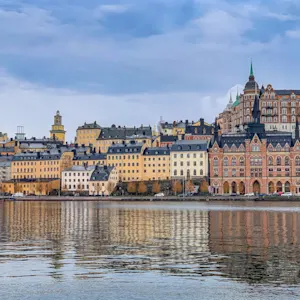
Stockholm is one of Europe's most beautifully situated capitals, built across fourteen islands where Lake Mälaren meets the Baltic Sea. The old town of Gamla Stan, with its medieval lanes, ochre and terracotta facades and cobbled squares, is an easy place to lose an afternoon. The city's museums are outstanding, from the Vasa warship to the Nordic Museum to the photography collections of Fotografiska. The waterfront neighbourhoods of Södermalm and Östermalm offer contrasting characters and excellent restaurants.
In the afternoon, consider a visit to the ABBA Museum, one of Stockholm's most enjoyable attractions, with interactive exhibits that reward curiosity whether you know every lyric or have never owned an album.
This morning join a small group walking Tour designed to showcase the city’s top landmarks, rich history, and vibrant culture. With your guide, explore highlights like Stortorget,the city’s oldest square along with the charming medieval streets of Gamla Stan, the famous Narrowest Street, and Stockholm’s tiniest statue. Along the way, uncover lesser-known treasures, such as a real Viking rune stone hidden in plain sight.
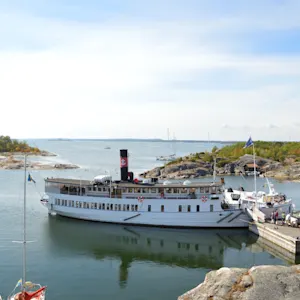
The morning and early afternoon is free in Stockholm before boarding the overnight voyage to Helsinki through the magnificent Baltic Sea archipelago. Accommodation in seaside cabins with shower/WC.
Arrive in Helsinki. You might choose to uncover the city’s architectural icons, wander through its leafy parks and design‑focused neighbourhoods, or use your Helsinki Card to dip into its numerous museums. A rich range of experiences remains available: guided city wanders, historic squares, bustling markets, cathedral visits, quiet courtyards, sauna culture, and even cross‑border adventures. The choice is entirely yours as you discover Helsinki’s charm.
The included Helsinki Card offers free entrance to almost 50 museums and attractions. Need to take a break? Head to the Kotiharjun Sauna, the last traditional wood‑burning sauna in Helsinki.
Dive into the culture, history, and hidden stories of Finland’s capital with our immersive Helsinki guided tours. Led by knowledgeable local guides, these experiences take you beyond the typical tourist paths to discover both major landmarks and lesser-known gems. Whether you’re interested in design, architecture, or Nordic history, you’ll gain authentic insight into this vibrant northern city.
The Helsinki small group walking tour is your chance to immerse yourself in the Finnish capital’s unique blend of history, culture, and design. Start with an overview of the city’s highlights and then dive deeper into the stories behind its most iconic landmarks, along with hidden gems you might otherwise miss.
Every tour is crafted to provide a well-rounded and enjoyable experience. Highlights often include: Senate Square and Helsinki Cathedral, the lively Market Square and harbor front, Uspenski Orthodox Cathedral, Esplanadi Park and the Design District, hidden courtyards, cafes, and art spots.
Your day trip to Tallinn will take the full day, departing Helsinki at 07:30 in the morning and arriving back at 19:30. The ferry trip each way takes two hours, and suddenly you find yourself at the shores of this Eastern beauty. Estonia connects Eastern Europe, Central Europe, and Scandinavia, offering something altogether different compared to your itinerary so far.
The Tallinn walking tour offers a perfect introduction to the city’s rich history, vibrant culture, and stunning architecture. Explore the enchanting medieval Old Town, admire the towering Alexander Nevsky Cathedral, and soak in breathtaking views from Toompea Hill. With your knowledgeable guide, you’ll also discover Tallinn’s off‑the‑beaten‑path gems - quaint cobblestone streets, charming courtyards, and lesser‑known districts that reveal a deeper story of this fascinating city.
Our services end after breakfast.
All prices listed are per person, based on two people sharing a room.
New attractions are opening all the time in these destinations - ask us for advice about tickets should be pre purchased before you depart.
IMPORTANT NOTE: Weather conditions may occasionally affect certain activities, and as a result, the schedule may be adjusted to ensure the best possible experience for all guests. For multi-activity stays, often the order of the activities will be confirmed locally on arrival. Activities might vary slightly in their duration or location due to the weather and local conditions. Any activities that are unable to be re-scheduled due to weather conditions, will be refunded as a general practice, as determined by the activity provider.



Explore the quiet charm, cultural depth, and seasonal beauty of the Baltic States of Estonia, Latvia, and Lithuania.


One of our Norwegian Destination Specialists grew up in Oslo and knows the city the way only a local can. Here are the five places she returns to again and again, from a quiet lake walk in the forest to the waterfront streets where the city really comes alive.
Built across 14 islands where Lake Mälaren meets the Baltic, Stockholm is a city that reveals itself slowly. Anna Hård, one of our Swedish Destination Specialists, shares the walks, restaurants and hidden corners she returns to again and again.
Beds and room types. Hotel rooms across Scandinavia are typically furnished with twin beds that can be pushed together to form a double. Single rooms tend to be smaller than doubles and usually have a shower rather than a bath. Purpose-built triple or family rooms are uncommon. If three people are sharing, expect a standard double room with an extra bed added, which means noticeably less space than a purpose-built triple would offer.
Luggage. Porters are rare at Scandinavian hotels. You will generally carry your own bags, so pack with this in mind, particularly on itineraries with frequent hotel changes.
Wi-fi. Free wi-fi is standard across the vast majority of Scandinavian hotels at all price points.
Tea and coffee. Unlike hotels in many other parts of the world, Scandinavian accommodation at the 3-star level rarely provides in-room tea and coffee facilities. There may be a kettle, but often nothing to go with it. Many hotels do offer complimentary tea and coffee in the reception area or lobby, so it is worth asking on arrival. If this matters to you, it is worth checking with us beforehand or bringing a small supply of your own.
Lunch in winter. On itineraries that include lunch during the winter months, expect a warm soup with bread rather than a full cooked meal. This is entirely typical across the region and often very good.
Remote hotels in Lapland. At more remote properties in the far north, the hotel or lodge where you are staying will be your only realistic dining option for dinner. This is entirely normal and nothing to be concerned about. Menus are typically limited to one or two main course choices, but the food is generally home-cooked and reflects the local landscape and ingredients well.
Laundry. Self-service washing machines and dryers are typically located in the basement. If you are staying in apartment-style accommodation and cannot find them, ask at reception.
Travel insurance is compulsory for all tours with 50 Degrees North. The safety of our travellers, staff and operators is a major priority of 50 Degrees North. With an operational office in Norway, 50 Degrees North has access to an up-to-the-minute flow of information regarding the countries we work in. We are also in regular contact with the various operators we use. Their in-depth knowledge and understanding of their various areas is vital.
Norway has a few items that typically surprise first-time visitors. Alcohol and luxury goods are heavily taxed, so prices are higher than you might expect. On the other hand, everyday necessities such as bread and milk are taxed at a lower rate and are generally good value. Eating and drinking out, particularly in restaurants and bars, is where most travellers feel the difference most acutely.
If you enjoy a drink, it is worth bringing your full duty-free allowance into Norway when you arrive. Alcohol bought in Norway is significantly more expensive than in most other countries, and there are many lovely parks, hotel terraces and balconies where you can enjoy what you have brought with you.
Current allowances for travellers entering Norway are set by Norwegian Customs. For the most up-to-date figures, check the official allowances at toll.no before you travel, as these are subject to change. As a general guide, the current duty-free quota for spirits, wine and beer follows a tiered system that allows you to mix and match within set limits. Note that beverages with more than 60% alcohol by volume cannot be imported at all, and you must be over 20 to import spirits above 22% ABV.
It is illegal to bring more than the permitted allowance into Norway without declaring it and paying duty. Customs checks do occur, particularly at ferry and land border crossings.
One thing that catches many travellers by surprise is the cost of razor blades. Good quality razor blades in Norway are expensive compared to most countries, so it is worth stocking up before you arrive.
Written by Jayde Kincaid, an Australian who married a Norwegian, and was happily (albeit with some hesitation) introduced to a world of Norwegian every day food habits.
At 50 Degrees North, we want to encourage our travellers to try local Norwegian food and drink. This may seem daunting in Norway, where restaurants and cafés can be expensive and some of the more remote villages have limited options. There is certainly no street food. One of the best ways to sample local flavours without stretching the budget is by self-catering. You will find friendly locals in small town grocery stores and supermarkets who are happy to help you pick out ingredients. Don't be shy, ask. And don't rush: make the local supermarket part of your holiday experience. Read the notice boards, and enjoy an ice cream out the front when you have finished. It is what the locals do.
Note: Statoil cups - Circle K petrol stations sell a reusable travel cup that gives you free refills of coffee, tea and hot chocolate at any Circle K station. A handy way to save money as you drive around Norway.
Norway has an extensive range of grocery stores, and in most small villages you will find at least one, sometimes two or three. Opening hours are limited, and most chains are closed on Sundays, with the exception of Bunnpris. Weekend hours are usually displayed in brackets on the sign out front. If you are heading into the mountains or along a remote coastal route, stock up with staples before you leave a larger town.
A few tips:
Meatballs or “meatcakes’: these come in all shapes, sizes and quality. They are generally really tasty, a step up from what you find at IKEA. Pick up a packet of dried ready-made brown sauce to go with them, and look out for lingonberry sauce or jam to serve alongside. Lingonberries are the little red circular berries served quite tart. If you want to make the brown sauce yourself, buy some brunost (brown cheese) and follow the recipe at the bottom of this page.
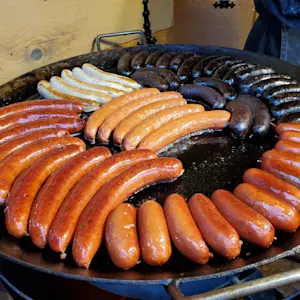
Hotdogs: known as pølse in Norwegian, hot dogs are the definitive fast food of Norway. They are sold at petrol stations, newsagents, corner stores and fast food outlets, and come with a dazzling variety of toppings and breads. Highlights include the bacon-wrapped variety sprinkled with dried onion, mustard and mayonnaise. You will also find them wrapped in waffles, mostly in and around Fredrikstad, or in lompe, the Norwegian flatbread pancake. Like Norwegian beer, pølse comes in seasonal varieties, with Christmas pølse (julepølse) appearing in the weeks before the holidays. Steer away from the tinned varieties.
Fish cakes: these come in many variations and are generally served with a white sauce and plenty of parsley. Often found in fish shops, fried or steamed and ready to eat. A great quick snack.
Reindeer: if you are travelling in the far north, try reindeer meat. It generally comes frozen, so look for finely cut reindeer in the freezer section. It is more expensive than other meats but absolutely delicious, if quite gamey. Fry it with mushrooms, a little brown cheese and rømme (crème fraîche), a bit like a beef stroganoff. Serve with boiled potatoes or rice.
Mushrooms: if you are travelling during the chanterelle season in mid to late August, look for the yellow mushrooms in the pine forests. You can pick them yourself, but image search them first so you know what you are looking for. They are wonderful with the brown cheese sauce and reindeer.
Salmon, prawns & fish: always look out for a chance to buy fresh fish. Look for local fish kiosks or fish shops, or small roadside signs pointing to fresh fish sales. The words to look for are reker (small shrimps, not prawns) and fersk fisk (fresh fish). Norwegian shrimps are small, sweet and harvested from the cool North Sea. Peel them and pile them on fresh white bread with mayonnaise, dill, pepper and salt. Norwegian smoked salmon is exceptional. Try the different varieties where you can, and in larger supermarkets or delis you can often taste before you buy.
Tubed ‘kaviar’ (caviar): cheap, practical and a genuine Norwegian staple. This is the thing Jayde's Norwegian husband craves the way an Australian abroad craves Vegemite.
Pre-made dips and salads: Norwegian supermarkets carry a wide range of premade salads and dips with a reasonable shelf life, ideal for sandwiches and picnics. The cubed beetroot salad and potato salads are particularly good. They come in easy-to-carry containers and tubed mayonnaise travels well too. Leverpostei (liver pâté) is also worth trying, served on brown bread with sliced red onion or sweet pickles. It is found on most Norwegian breakfast tables.
Yoghurt: a small warning here. Norwegian yoghurt comes in styles ranging from thick and creamy to very runny and sour. The runny variety sometimes comes in a carton that looks exactly like a milk carton. Sour runny yoghurt is not nice in your coffee. When in doubt, ask a local.
Bread: supermarket bread in Norway generally comes uncut. There are bread cutting machines near the bakery section in most stores, and staff are happy to help the first time. The bread can be fairly plain in the main supermarkets, so look for boutique bakeries in larger towns if you enjoy something more interesting. Keep an eye out for lefse, the Norwegian flatbread similar to a soft tortilla, usually served with butter and sugar, sometimes with cinnamon, and occasionally made with potato.
Waffles: Norwegian waffle stalls are the equivalent of a sausage sizzle. They are the most common community fundraising food and turn up everywhere. Do not expect sweet jam and whipped cream. These are fresh, chewy waffles served with sour cream and homemade tart berry jam. Never walk past one.
Chocolate: try Freia milk chocolate while you are here. It is genuinely excellent.
Berries: in early autumn, roughly mid to late August, the forests come alive with berries. Ask a local where to look and head up into the hills. You may find blueberries, lingonberries, raspberries, and if you are in the far north or the central mountains, the rare and prized yellow cloudberry.
On a self-drive journey, always slow down for small farm shops and roadside stands.
Strawberries: if you are travelling during strawberry season, stop. Norwegian strawberries, grown in soil that has rested through a long winter, are extraordinary. If you pass a self-pick farm, put everything else on hold and go in. Norwegians wait all year for this.
New potatoes: look for new season potatoes sold in small stands beside the road, often on an honesty system where you take a bag and leave the money in a tin.
CLASSIC RECIPE: brown cheese sauce
Basic Brown Cheese Recipe – can be used with meatballs, reindeer, with added mushrooms.
• 2 tablespoons butter
• 2 tablespoons flour
• 3⁄4 cup light cream
• 1⁄2 cup chicken broth (optional - just use water if you cannot find this)
• 1 cup shredded gjetost or brown goats cheese
• 3⁄4 cup rømme (crème fraiche)
• 2 tablespoons chopped parsley or 2 tablespoons fresh dill
Using the pan from your browned meat, remove as much oil as possible and blend in the butter and flour over heat. Remove from heat and blend in the cream. Add the broth, return to heat and bring to the boil, stirring until thickened. Mix in the gjetost. Turn the heat to low. Blend a little of the sauce into the rømme to temper it, then stir it all back into the pan. Add the parsley or dill and serve.
Happy shopping and cooking!


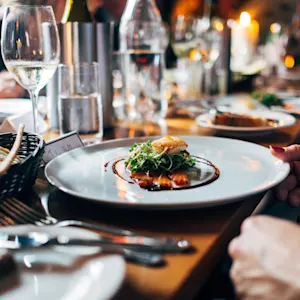
Oslo's restaurant scene reflects the depth and ambition you would expect from a Scandinavian capital. Drawing on the principles of the New Nordic Food Movement, many of the city's best kitchens build their menus around wild, organic and locally sourced Norwegian ingredients, turning traditional flavours into something genuinely contemporary. But the range here is wide, from long-established institutions to casual neighbourhood spots that reveal a different side of the city altogether.
Norwegian cuisine in its traditional form is rooted in the raw materials available across the country's mountains, wilderness and coast. It differs from its continental counterparts in its stronger focus on game and fish, and many of the classic dishes reflect a long tradition of preservation, shaped by the demands of long winters.
Lofoten Fiskerestaurant: a long-established seafood restaurant at Aker Brygge, with a maritime menu built around the freshest Norwegian fish and shellfish, and harbour views to match.
Kontrast: near Mathallen, in Oslo's former industrial Vulkan district. Now holding two Michelin stars and a Green Star for sustainability, this is one of Norway's most celebrated kitchens. Chef Mikael Svensson's menu is rooted in wild, organic Norwegian produce, and the experience is firmly in the fine dining category.
Maaemo: Oslo's only three-Michelin-star restaurant, and one of the most acclaimed in Scandinavia. A seasonal tasting menu built entirely on organic, biodynamic and wild Norwegian ingredients, served in a dramatic dining room near Oslo Central Station.
Nedre Foss Gård: a beautifully restored historic farm complex beside the Akerselva river in Grünerløkka. The building was gutted by fire in December 2015 and reopened in 2017, and today it is one of the most atmospheric places to eat in Oslo, with a seasonal menu focused on local producers and an outdoor courtyard that comes into its own in summer.
Theatercafeen: a piece of Oslo cultural history, located in the Hotel Continental opposite the National Theatre. In operation since 1900 and beloved by the city's arts and literary world, it remains one of the most characterful places for a long lunch or dinner.
Solsiden Restaurant — a celebrated seasonal seafood restaurant in a former harbour warehouse, directly below Akershus Fortress, with views across the Oslo Fjord. Open from May to September only, so plan accordingly.
De Fem Stuer — set in the historic 1894 Scandic Holmenkollen Park Hotel, high on the hill above the city. The views over Oslo and the fjord are exceptional, and the menu draws on Norwegian ingredients with a modern Nordic sensibility.
Ekebergrestauranten — perched on the Ekeberg hillside with sweeping panoramic views over the city and the Oslo Fjord, housed in a beautifully restored functionalist building from 1929.
Engebret Café — one of Oslo's oldest restaurants, in a 17th-century building in the heart of the old town. Traditional Norwegian food in a setting that has changed little over the centuries.
Frognerseteren Restaurant: Finstua — at the top of the Holmenkollen metro line, with a rustic lodge interior and one of the finest views in the city. A good stop after a walk in the Nordmarka forest.
For more affordable dining, head to the Grünerløkka district. This once working-class area on the east side of the city is now one of Oslo's most vibrant neighbourhoods, with a strong concentration of independent restaurants, cafés and bars grouped around the streets Markveien and Thorvald Meyers Gate. The food here ranges from casual Nordic to international, and the atmosphere on a busy weekend evening is hard to beat.
