
Bergen
Bergen is more than a gateway to the fjords. It is a city shaped by sea, trade and mountain light.
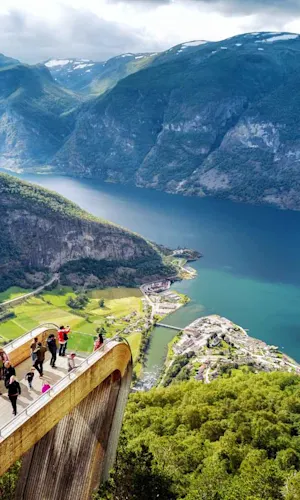
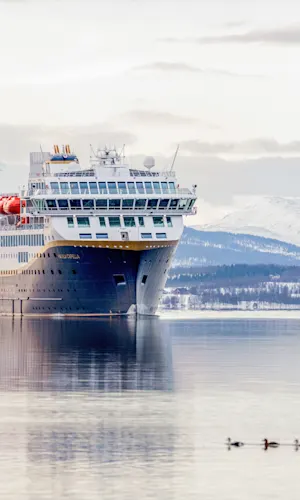
Bergen is Norway's old Hanseatic capital on the west coast, and the gateway to the western fjords. Set between seven mountains, it is known for the colourful wooden wharf of Bryggen, a UNESCO World Heritage Site, a working fish market, and its position as the southernmost port for coastal voyages with Havila and Hurtigruten. It tends to stay with people longer than they expected, and it rewards time spent without a fixed agenda.
Our destination guide further down the page answers the most common questions about visiting Bergen.
Style
Season
Duration
Tour Standard




















Gallery


How do you get to Bergen, and to the fjords from there?
Bergen is easily reached by air, including international routes, and by train from Oslo. The seven-hour Oslo to Bergen railway is one of the most scenic rail journeys in Europe, crossing high mountain plateaus and descending through valleys that shift with every season. Bergen is also the southernmost starting and ending point for coastal voyages, which makes it a natural anchor for a wider fjord journey.
What is there to do in Bergen?
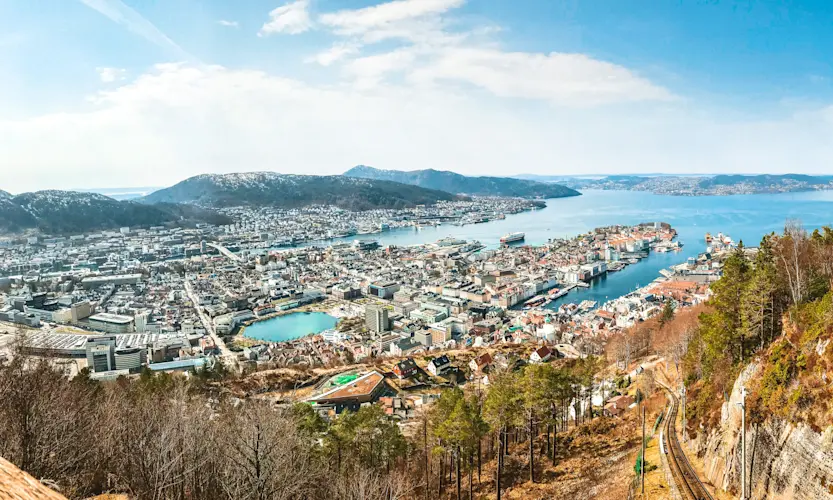
Bergen rewards time spent without a fixed agenda, but a few things are worth planning for. Mount Fløyen is reached in minutes by the Fløibanen funicular from the city centre, with panoramic views and well-marked trails from the top for most fitness levels. Bryggen, the old Hanseatic wharf on the eastern harbour, is best explored by walking the alleyways between the warehouses rather than just the waterfront. The Bergen Fish Market on the wharf is a good place for fresh seafood at lunch, and the Bergen Aquarium on the Nordnes Peninsula makes a good half-day, particularly for families. For wider views, a cable car runs up Mount Ulriken, the highest of the seven mountains at 643 metres, and the old neighbourhood of Gamle Bergen, an open-air museum of wooden houses, gives a feel for how the city looked before its many fires.
Is Bryggen worth visiting?
Yes, it is the part of Bergen most shaped by its trading past, and a UNESCO World Heritage Site since 1979. The colourful wooden houses were rebuilt after the fire of 1702 on medieval foundations, on the site of the Hanseatic Kontor, one of only four such trading offices the Hanseatic League established across Europe and the only one preserved today. German merchants controlled the northern stockfish trade here for roughly 400 years. Walking the alleyways between the warehouse rows, rather than along the facade, gives the clearest sense of how compact that community once was. Bergen was also a European Capital of Culture in 2000, part of a story that stretches across the region: read more on the Nordic and Baltic European Capitals of Culture.
Is Troldhaugen worth the trip?
Troldhaugen, the summer home of composer Edvard Grieg, sits on Lake Nordås about 10 kilometres south of the city, and is worth planning around rather than fitting in at the end of a day. Grieg and his wife Nina spent the last 22 summers of his life here, and it was in the small hut beside the lake that he wrote many of his best-known lyric pieces. The purpose-built Troldsalen hall holds daily lunchtime recitals through summer. It is reached by Bergen Light Rail (line 1 to Hop) or tourist bus.
When is the best time to visit Bergen?
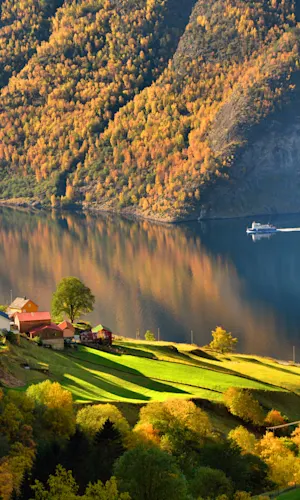
Bergen is worth visiting in any season. Summer brings long days, warm evenings and swimming in sheltered bays; autumn strips the hillsides to gold and copper; winter is quiet and often dramatic, with low cloud in the valleys and snow on the mountains. Rain is a constant in most months, which is simply part of what Bergen is: a city that has always looked outward to the sea rather than waiting for fine weather. For us, the particular pleasure of Bergen is less about ticking off attractions than simply being there: sitting by the water, wandering without a destination, and letting the city show itself at its own pace.