A journey through Northern Norway and Lofoten
A coastal route shaped by light, islands and everyday life in the far north of Europe.
5 days | Independent | Sep-Oct | Skårungen
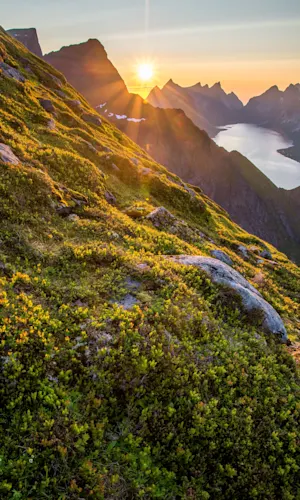
Experience Lofoten in autumn, when golden colours, crisp Arctic air and quieter surroundings create the perfect setting for an unforgettable Arctic escape. Based at the charming Skårungen waterfront retreat, this itinerary combines stunning natural beauty with the freedom to experience the islands at a relaxed pace.
Discover the dramatic landscapes of the Lofoten Islands on a Sea Eagle Safari to the spectacular Trollfjord, where towering cliffs, rugged coastlines and abundant wildlife await. As the dark evenings return, join a guided Northern Lights tour in search of the aurora, one of nature's most extraordinary displays. You'll also have a full day with your own rental car, allowing you to explore picturesque fishing villages, scenic coastal roads and breathtaking viewpoints at your own pace, before unwinding with a private spa experience overlooking the fjords.
Autumn is one of the most rewarding times to visit Lofoten, with fewer visitors, beautiful seasonal light and excellent conditions for both sightseeing and aurora viewing. Perfect for couples, independent travellers and nature lovers, this short getaway showcases the unique charm, tranquillity and natural wonders of Arctic Norway, while offering exceptional photography opportunities amid dramatic landscapes and the beautiful light of autumn.
As a Certified B Corporation, 50 Degrees North has designed this itinerary using handpicked local hoteliers and suppliers who share our ethos of delivering services and activities of high social and environmental standards.
Through our Climate Action Plan, we measure our carbon emissions each year and set goals to reduce them. But our responsibility does not end when the journey does. A share of our annual profits goes to our Impact Fund, supporting conservation, restoration and the communities we work in.
On arrival at Evenes Airport, enjoy a scenic transfer of approximately 2.5 hours to Skårungen in Kabelvåg, passing through some of Lofoten's most spectacular coastal and mountain scenery. Check in to your comfortable accommodation and settle in. Enjoy a relaxed evening surrounded by the peaceful winter landscape.
Today you'll head out on a Sea Eagle Safari to the legendary Trollfjord, one of Northern Norway's most iconic and dramatic fjords. Travelling by RIB boat through the narrow Raftsundet strait, you'll be surrounded by towering mountain peaks and rugged coastal scenery while keeping watch for majestic white-tailed sea eagles, which can often be seen soaring overhead. Along the way, learn about the history of the region and the significance of the fjords to local communities and fishermen for generations.
Return to Skårungen in the afternoon and unwind with your private spa session, the perfect way to relax after a day of adventure on the water.
Enjoy a relaxed morning at Skårungen, with time to explore the surrounding coastline and take in the beautiful autumn scenery of the Lofoten Islands. Surrounded by mountains, sheltered bays and traditional fishing villages, this is the perfect opportunity to experience the slower pace of life in Northern Norway.
As darkness falls, set out on a guided Northern Lights tour in search of the Aurora Borealis. Autumn is one of the best times to witness this natural phenomenon, as the return of dark Arctic nights and often stable weather conditions create excellent viewing opportunities.
Using local knowledge and the latest weather conditions, your guide will take you to some of the best viewing locations in Lofoten, from secluded beaches to scenic fjord viewpoints. Along the way, learn about life in the Arctic and the folklore surrounding this spectacular phenomenon. With minimal light pollution and clear autumn skies, you'll have excellent opportunities to witness the aurora dancing overhead before returning to Skårungen for the night.
Enjoy the freedom of a full day with your rental car and discover the Lofoten Islands at your own pace. Follow scenic coastal roads, stop at white-sand beaches and dramatic viewpoints, and explore the region's charming fishing villages. From your hotel, the lively harbour town of Svolvær, the picturesque fishing village of Henningsvær, and the beautiful beaches of Gimsøy are all within easy reach.
In the evening, return to Skårungen and unwind after a day of adventure.
Enjoy your final breakfast and take in the peaceful surroundings of Skårungen before checking out. A transfer to Evenes Airport is included.
Pricing note: Standard prices are quoted per person, based on 2 adults sharing.
Family prices are quoted per room and based on the following occupancies:
Standard (per person) – 2 adults sharing a Sea View Hotel Room
Family Triple (total price) – 2 adults and 1 child (age 8-14) sharing a Waterfront Cabin
Family Quad (total price) – 2 adults and 2 children (age 8-14) sharing a Waterfront Cabin
Minimum age for this tour is 8 years
A coastal route shaped by light, islands and everyday life in the far north of Europe.
Ethical eating, sustainable farming and local produce bursting with flavour, our new tour discovers the very best of Norwegian cuisine in the Lofoten Archipelago, Norway.
Our 'Lofoten and Havila on the Norwegian Coast' tour comes from the heart. With pride, we offer independent itineraries exploring secret coastal gems.
A coastal route shaped by light, islands and everyday life in the far north of Europe.
There are few regions in Europe where landscape and daily life feel as closely connected as they do along the northern coast of Norway.
This coastal route forms the backbone of the Summer Journey in Northern Norway & Lofoten, an 8-day small-group journey designed to explore the far north slowly and thoughtfully, following the natural flow of islands, sea and community life.
In summer, this part of Norway is experienced under almost continuous daylight. The sun barely dips below the horizon, evenings soften into long golden hours, and the rhythm of travel changes. Time stretches, plans become more flexible, and the landscape invites you to linger rather than move on quickly.
From the wide skies of Bodø to the sheltered harbours of Lofoten, the rural island communities of Vesterålen, the wild curves of Senja and the lively Arctic gateway of Tromsø, this part of Norway unfolds as a continuous coastal journey rather than a collection of isolated destinations.
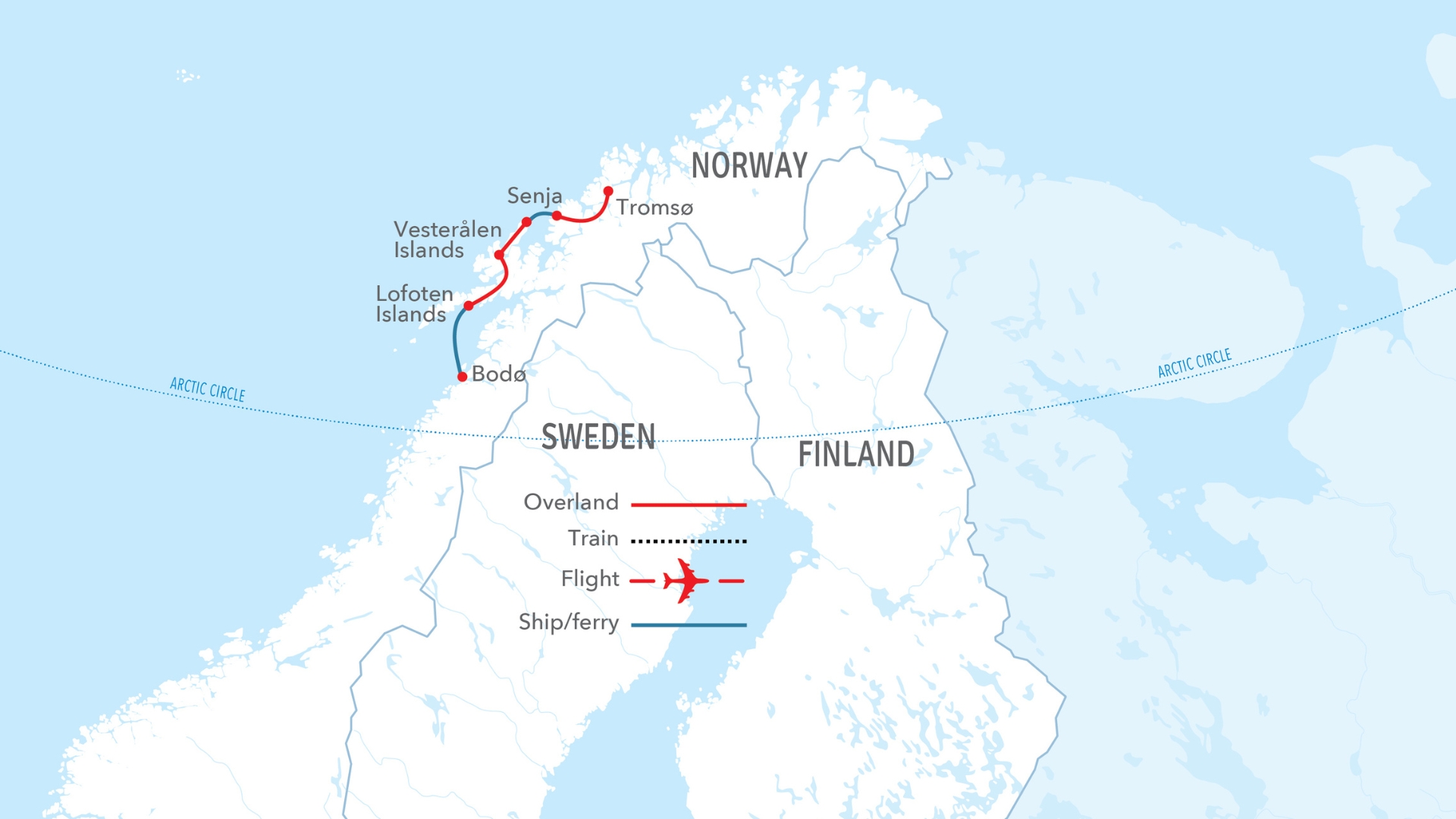
This journey through Northern Norway follows one of the country’s most distinctive travel corridors, connecting Bodø, the Lofoten archipelago, Vesterålen, Senja and Tromsø.
Moving by a combination of road and sea, the route reveals how closely the region’s communities are shaped by the coastline. Bridges and ferries replace long inland drives, and travel becomes part of the experience rather than simply a way to reach the next stop.
Rather than attempting to cover all of Norway, this route stays entirely within the north. The result is a deeper, more coherent understanding of place and a rhythm of travel that feels natural to the landscape.
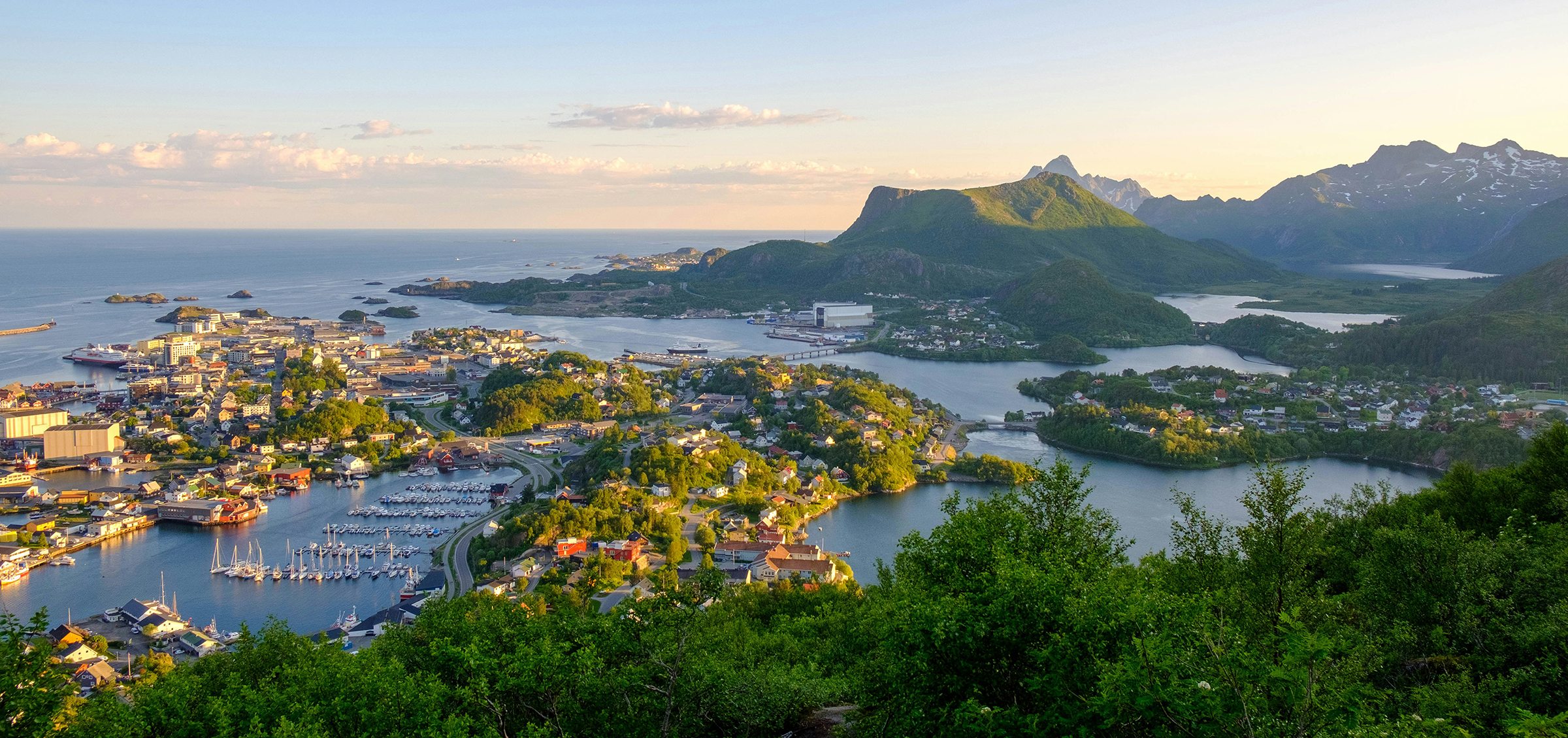
Bodø is often the natural starting point for journeys into Northern Norway.
Set beside open ocean and powerful tidal currents, it introduces travellers to the forces that shape life along the northern coast. The surrounding landscape feels expansive and exposed, with wide skies, shifting weather and a constant presence of the sea.
Bodø offers an accessible gateway into the far north while retaining a distinctly regional character.

Image: Tommy Andreassen - www.nordnorge.com
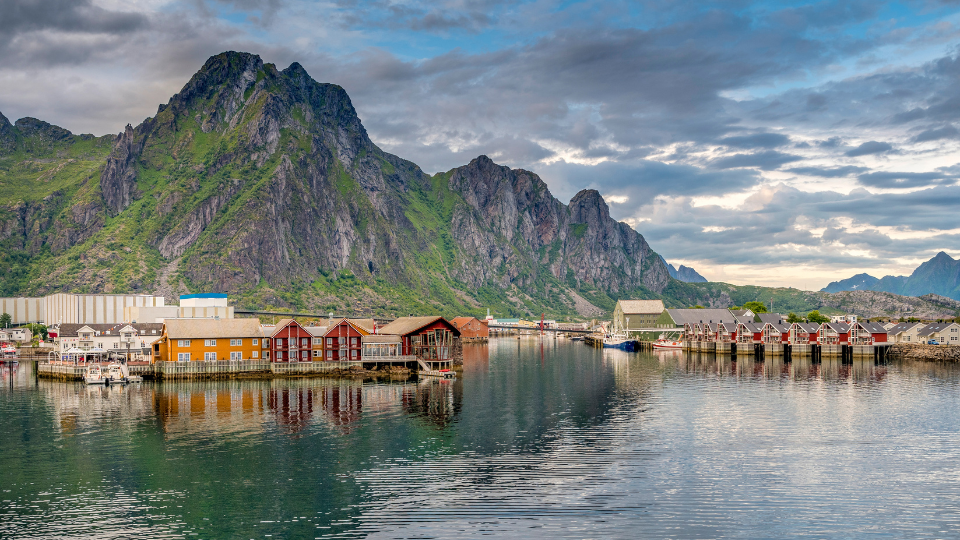
The Lofoten archipelago is known for its sharp granite peaks rising directly from the sea, yet its identity is equally defined by the fishing villages that sit quietly along narrow harbours.
Here, daily life continues at a gentle pace among drying racks for stockfish, small boats returning to the quay and houses perched close to the water’s edge. White-sand beaches, sheltered coves and short walking trails sit only minutes from working communities.
Lofoten combines some of Norway’s most recognisable scenery with a strong sense of continuity and local culture.
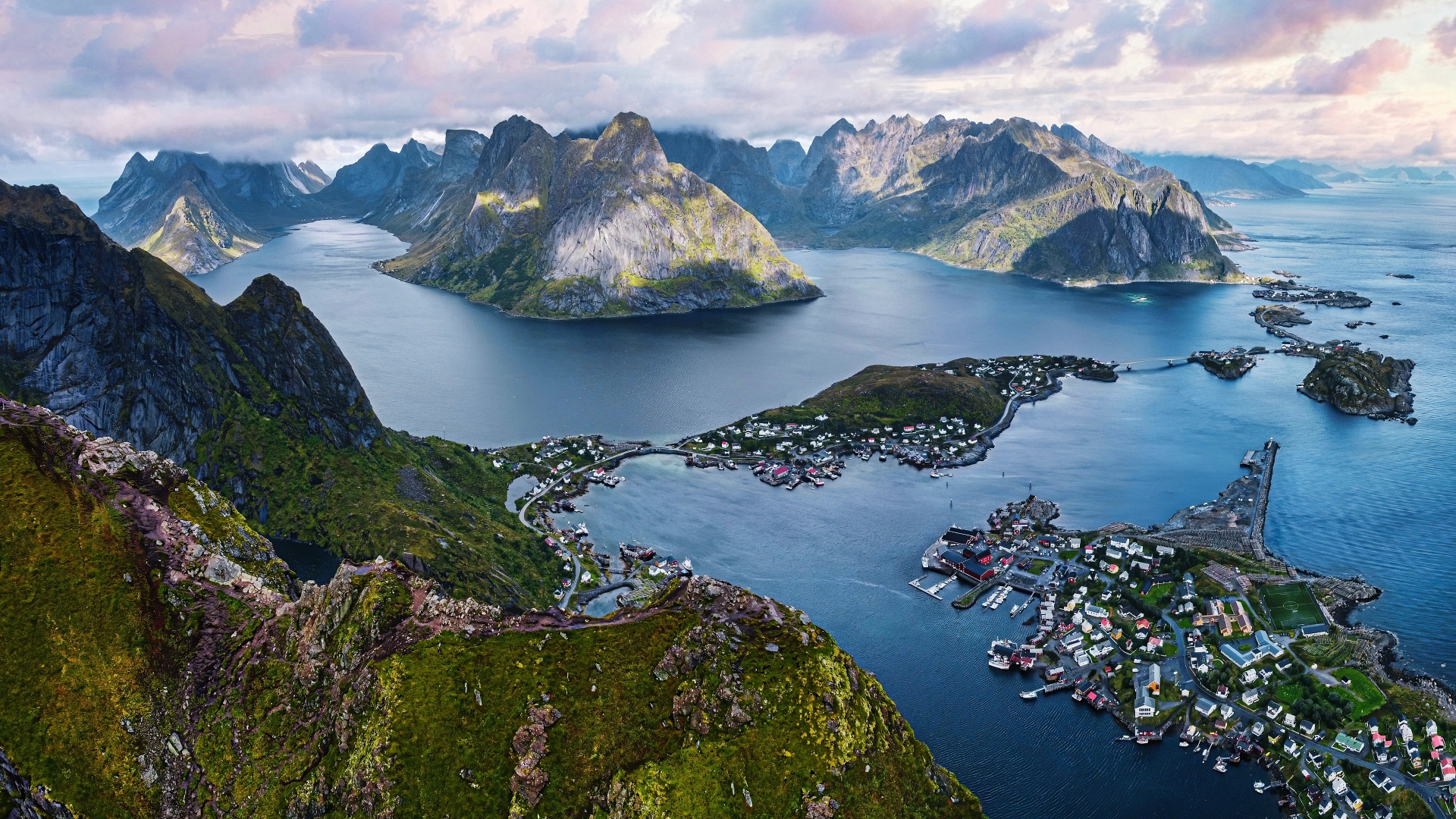
Just north of Lofoten, Vesterålen offers a noticeably different atmosphere.
The landscape opens out. Mountains become softer and more rounded, farmland appears between coastal inlets, and villages feel more dispersed. Tourism remains lighter here, allowing travellers to experience a slower rhythm and a closer connection to both land and sea.
Food and daily life in Vesterålen remain closely tied to season and environment, with fishing, farming and coastal traditions shaping everyday routines across the islands.
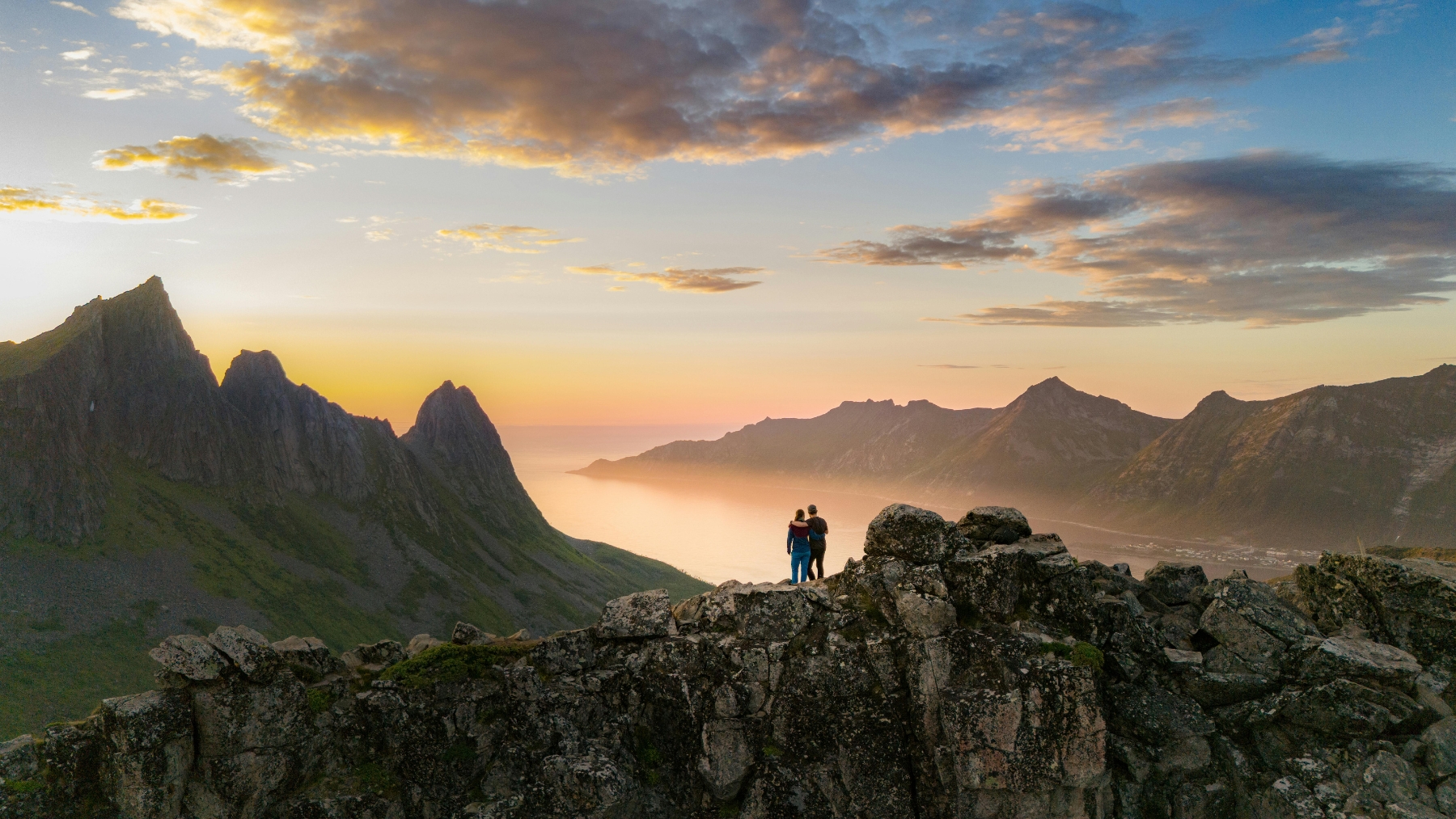
Senja feels more remote again, defined by dramatic coastal roads, steep cliffs and deeply indented fjords.
Often described as ‘Norway in miniature’, the island brings together many of the country’s best-known landscapes in one compact region, yet without the busier atmosphere found further south.
Here, travel is shaped by long views across open water, quiet roadside viewpoints and the constant presence of wind, light and changing cloud.
At the northern end of the route lies Tromsø, a lively coastal city with a long history of Arctic exploration, fishing and trade.
Today, it combines a strong cultural scene with university life, restaurants and museums, all set against a backdrop of mountains and water. Tromsø provides a natural point of arrival or departure and a contrasting urban layer to an otherwise island-focused journey.
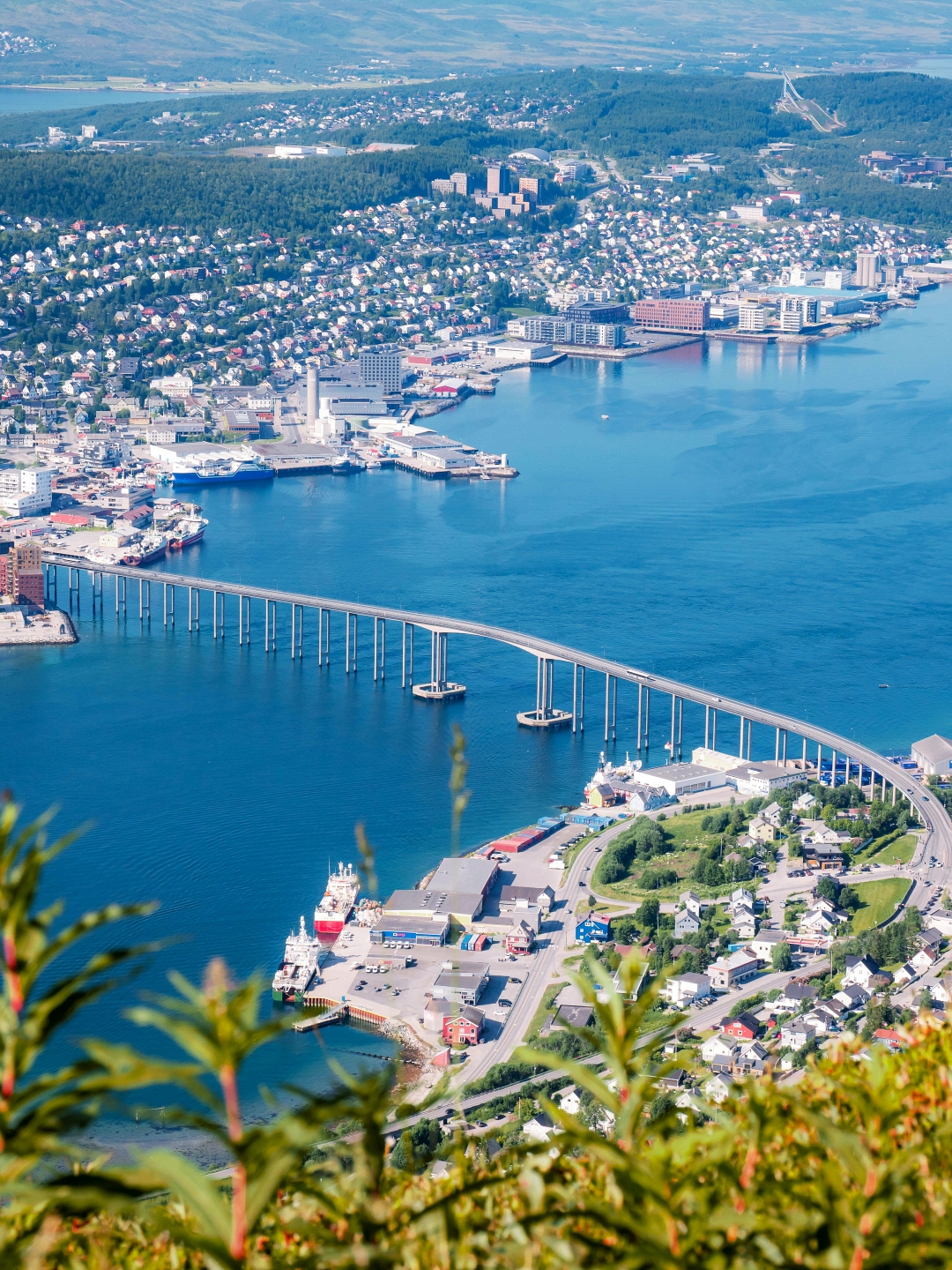
More than any single attraction, it is the rhythm of travel that defines this route.
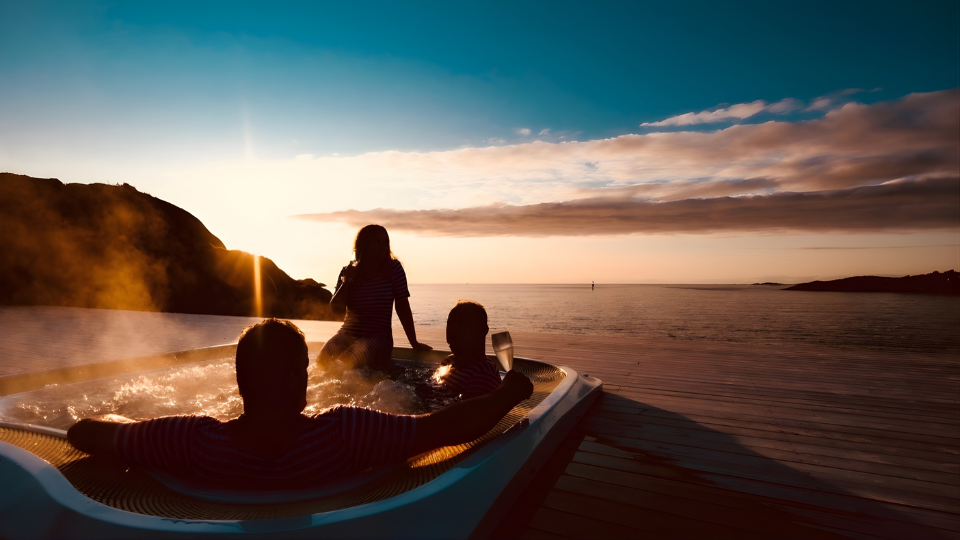
The extended daylight of Arctic summer brings a noticeably different pace. There is time to linger over meals, pause without watching the clock and spend evenings outdoors as soft light glows across fjords and mountains. In places such as Senja, it is not unusual to find yourself outside late at night, watching subtle shifts of colour while the sun still hangs above the horizon.
Short sea crossings, scenic coastal drives and time spent in small communities create space to observe how life is lived in the north. Weather and light influence plans, encouraging flexibility and a deeper appreciation of slower travel.
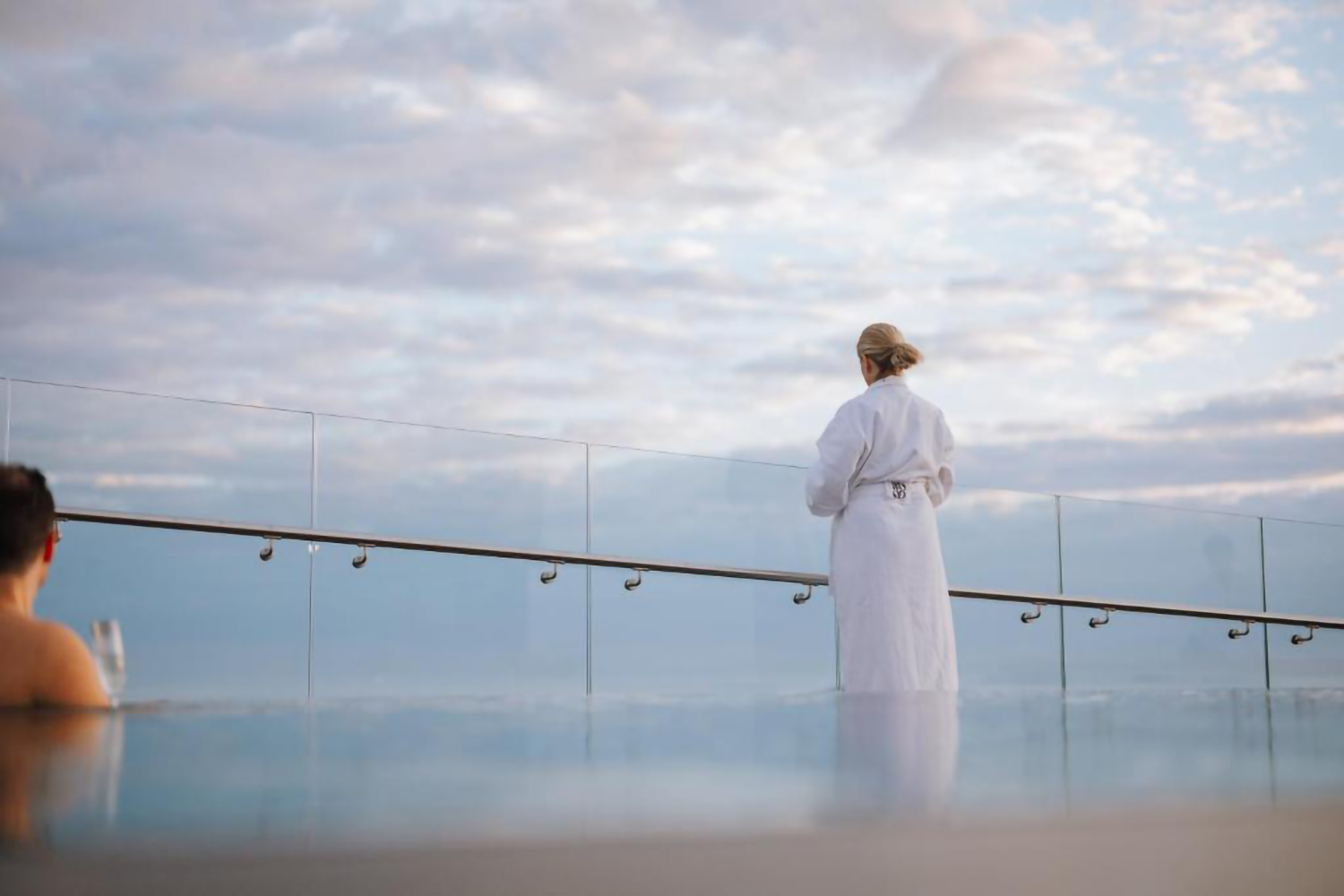
Travellers who choose this route often describe it as unexpectedly restorative, a journey that stays with them long after they return home.
Across Northern Norway, food is closely tied to season and location.
Seafood arrives directly from nearby waters, local farms supply produce adapted to northern growing conditions, and traditional methods of preserving and preparing food remain visible in everyday life.
From simple local tastings in fishing villages to standout farm-to-table experiences where ingredients are grown, raised or caught nearby, meals become an important way of understanding the relationship between people, landscape and season.
This journey through Northern Norway and Lofoten can be experienced in several ways, including as a self-drive route, by combining coastal sailings with land travel, or as part of a guided journey.
When experienced as a guided small-group journey, logistics become smoother and the focus remains on the landscape, light and rhythm of travel rather than daily planning. There is space for individual moments alongside shared experiences, supported by local knowledge and thoughtful pacing.
What matters most is allowing enough time to move slowly between places and to notice the subtle differences between each island group and coastal community.
For many travellers, this part of Northern Norway becomes the most memorable journey of their European travels, not because of what is seen, but because of how it feels to be there.
For travellers who have already explored much of Europe, this northern coastal route offers something genuinely different.
It is not defined by landmarks alone, but by atmosphere. By the way the light softens the edges of mountains late at night. By the quiet routines of harbour life. And by the deep sense of space that comes from travelling along one of Europe’s most distinctive and least hurried coastlines.
A journey through Northern Norway and Lofoten is, above all, an invitation to experience the far north as it truly is: lived in, working, welcoming and quietly extraordinary.
See the full Summer Journey in Northern Norway & Lofoten itinerary.
Satu Vänskä-Westgarth is Director of Product at 50 Degrees North. Finnish, and living in Norway for close to 20 years, she has worked across the travel industry from raft guiding and travel writing to product strategy, and designs the company's Nordic journeys around authentic, local experiences. A keen photographer, she travels widely across the north, from Lofoten to the Faroe Islands and Greenland. Read more about Satu.
Ethical eating, sustainable farming and local produce bursting with flavour, our new tour discovers the very best of Norwegian cuisine in the Lofoten Archipelago, Norway.
Norway is widely known for its farming and fishing, with traditional national recipes like lutefisk (salted cod) and pinnekjøtt (lamb ribs) originating from the Nordics. However, it’s also emerging as a key destination which is embracing sustainable food practices, with organic farming on the rise and a cultural shift towards embracing local produce and centuries old traditions of farming and harvesting.
50 Degrees North have put together a tour, 'Lofoten Culinary Food Week' which celebrates our food heroes in Norway and includes some of the finest sustainable food experiences in the country. We have based the tour in Lofoten, the land of the Vikings and a fairy-tale like landscape with mountains rising dramatically out of the seas. The archipelago is known for the northern lights, midnight sun and small villages, but also for their rich cultural heritage and exceptional dining experiences.
The first stop is Holmen Lofoten, a remote collection of fishermens cabins perched on the shoreline. Here guests can log off from the hustle and bustle of daily life, and fine tune into their surroundings, with an emphasis on reconnecting with nature and soaking up the cosy atmosphere. Holmen was created by Ingunn Rasmussen, who grew up in the area living off the land and sea, foraging and fishing and whose first job at the age of five was to put baits on the fishing lines. Her family lived self-sufficiently for everything they needed, from food to clothing.

This ethos has carried through to Holmen Lofoten. Due to unpredictable weather surrounding the Lofoten islands it can be hard to take deliveries from the mainland, this means that living sufficiently off the land is integral to their work. Ingredients such as Sheep’s Sorrell, a flowering plant used in a variety of ways, can be foraged locally and preserved for use throughout the year – making it a staple ingredient for many of the chefs in Lofoten. Holmen partner with carefully selected local suppliers, many of whom will grow and farm the animals specifically for their restaurant. Guests can enjoy such local delights as coalfish, halibut, snow hares, berries and, of course, the famous Norwegian cod.
Cod fishing has been an integral part of the Lofotens, and indeed Europe's history. Explorers relied on dried cod as a vital preserved food source for crossing continents, as such it drew fishermen to the area where the seas were abundant. Such was its popularity that by the 1980's, in part due to newer industrialised fishing fleets, cod stocks were decimated. The government put in strict quotas to prevent overfishing and since then the Norwegian cod have bounced back and are now hailed as the most sustainable cod stock in the world.
Guests are invited to learn more about the rich history that the island has to offer, and activities will reflect this. Included on this itinerary is an afternoon with the local fisherman on a Deep-Sea fishing trip. 
Another unusual delicacy in the region is Seaweed, and thanks to one of the world’s strongest tidal currents there’s an abundance of it in Lofoten. Seaweed is packed full of essential nutrients and increasingly seen as a sustainable food source, requiring no feed other than sunlight and the nutrient rich waters that it lives in. Due to Norway’s expansive coastline and long hours of sunlight during the summer months, boosting growth, Seaweed has the potential to become a significant industry in the country, and will be seen as major player in the countries goal to a greener more sustainable economy. 
Our guests have the option to get suited and booted to brave the icy waters in a wild-harvesting seaweed experience with the Lofoten Seaweed Company, where your guide will take you out by RIB boat to a beautiful and secluded spot to learn more about this rich ecosystem that lies beneath the waves.
Although the islands are famous for their ancient fishing traditions, food sources are not limited to seafood. Vestvågøy, in the Lofoten lowlands, once an ancient Viking settlement is now the largest agricultural municipality in Norway. This is something that Roy Magne, former Norwegian ‘Chef of the Year’ and winner of multiple Norwegian and Internal cooking awards, is keen to celebrate and as such includes locally farmed meat such as free-range pork, angus cattle, grouse “wild sheep”, and even moose on the menu.
One of the highlights of this experience is a cooking class and open kitchen experience at Roy’s Lofoten Food Studios, while he prepares and serves multi-course menus inspired by the four amazing seasons of Lofoten.
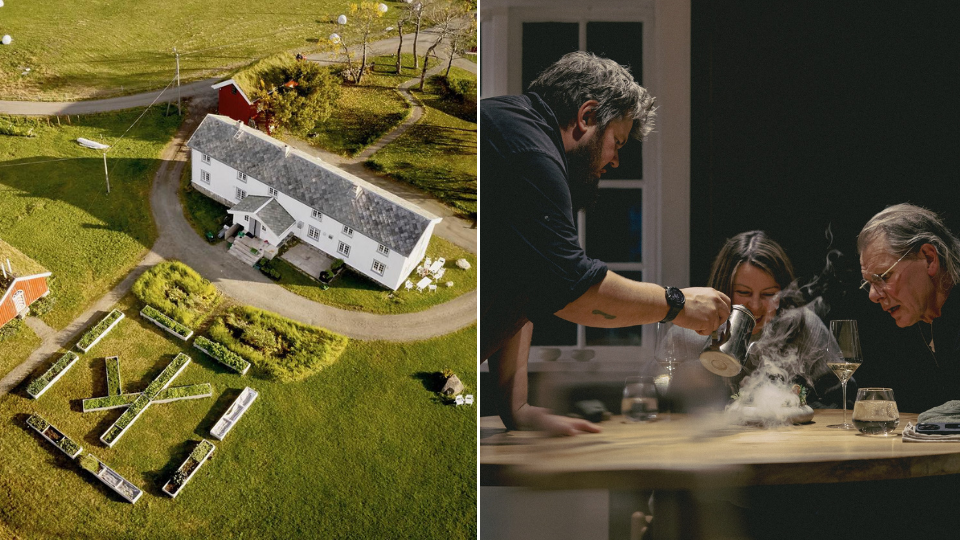
Of course, sustainable dining is not limited just to where your food is sourced from; it is important to also consider the whole life cycle of your meal, from ground to plate to ground. One chef who has come to appreciate the value of ingredients which are traditionally disregarded or discarded is Halvar Ellingsen, winner of multiple culinary awards and who has worked for some of Norway’s finest restaurants. Reducing food waste is the philosophy behind this organic working farm - they grow all their own vegetables and produce and use as much of the livestock as they can when cooking to ensure as little as possible goes to waste. This farm is the final stop on our culinary trail and guests are encouraged to explore and enjoy this unique garden working farm, meet the free-range pigs, wander the herb gardens, and settle down to a 20-25 course tasting menu.
Image credits: Holmen Lofoten, Lofoten Seaweed Company and Lofoten Food Studios
Our 'Lofoten and Havila on the Norwegian Coast' tour comes from the heart. With pride, we offer independent itineraries exploring secret coastal gems.
“The beauty of this place is simply staggering”. Lonely Planet
Our new range, Norwegian Coast, comes from the heart. With pride, we offer independent itineraries exploring secret coastal gems. These tours utilise the Norwegian coastal ferries, regional trains and express boats to get around.
The Lofoten Islands is a secret gem in the Northern part of Norway. Laid out against summer greens and yellows, Lofoten's razor-sharp peaks poke dark against a clear, cobalt sky. In the pure, exhilarating air, there’s a constant tang of salt and, in the villages, more than a whiff of cod, that giant of the seas whose annual migration brings wealth. It's a dream for hikers, fishermen and all nature lovers.
One of the world's greatest seasonal fisheries takes place in Lofoten in spring, and the place is full of life. The arctic cod swim down from the vast, nutritious areas of the Barents Sea in their millions, en route to the spawning grounds near Lofoten in order to ensure the survival of the species. Overhead you will see huge Sea Eagles soar in search of their own feast.
The world's most stunning archipelago is waiting for you!
Day 1: Arrive Bergen - superior centrally located hotel
Day 2: Explore Bergen - hiking, galleries, museums and outdoor pursuits..
Day 3: The Havila Coastal Voyage begins
Day 4: Ålesund and Geirangerfjord
Day 5: The Royal City of Trondheim and then thousands of islands towards Rørvik.
Day 6: Arctic Circle and Lofoten Islands
Day 7 & 8: The Magical Lofoten - self-drive and explore these islands to the fullest!
Day 9: Drive to the local airport and drop off your hire car.
The archipelago offers a number of activities, such as walking, cycling, diving, golfing, northern lights viewing, excursions by hire car, scuba diving, viking museums, sea safaris and much more. Lofoten is one of our favourite destinations along the long Norwegian coast. We have included a nature safari into your itinerary.
Due to the warm Gulf Stream, Lofoten has a much milder climate than other parts of the world at the same latitude. Between late May and mid July you can experience the midnight sun, whilst the northern lights can be viewed from September to mid April.
Lofoten is known for the old fishermen's cabins ("rorbuer") that have been restored and turned into modern accommodation for travellers. Your accommodation for this stay in Lofoten is at the Svinøya Rorbuer, centrally situated in Svolvær harbour. Situated on it's own island, your accommodation is accessible by bridge and is within easy walking distance of the city centre.
Each cabin has one to three double bedrooms, a well-equipped kitchen (some have been renovated and lost their kitchen) and lounge, and a modern bathroom with shower and toilet. Considerable emphasis has been placed on maintaining the authenticity of the rorbu cabins.
The rorbu cabins are idyllically located between the fish landing station, quayside buildings, fish racks and other traditional, local buildings. Here, you have the sea on one side, and the spectacular Lofoten peaks on the other.


Image: Havila Marius Beck Dahle