Iceland Northern Lights Tours
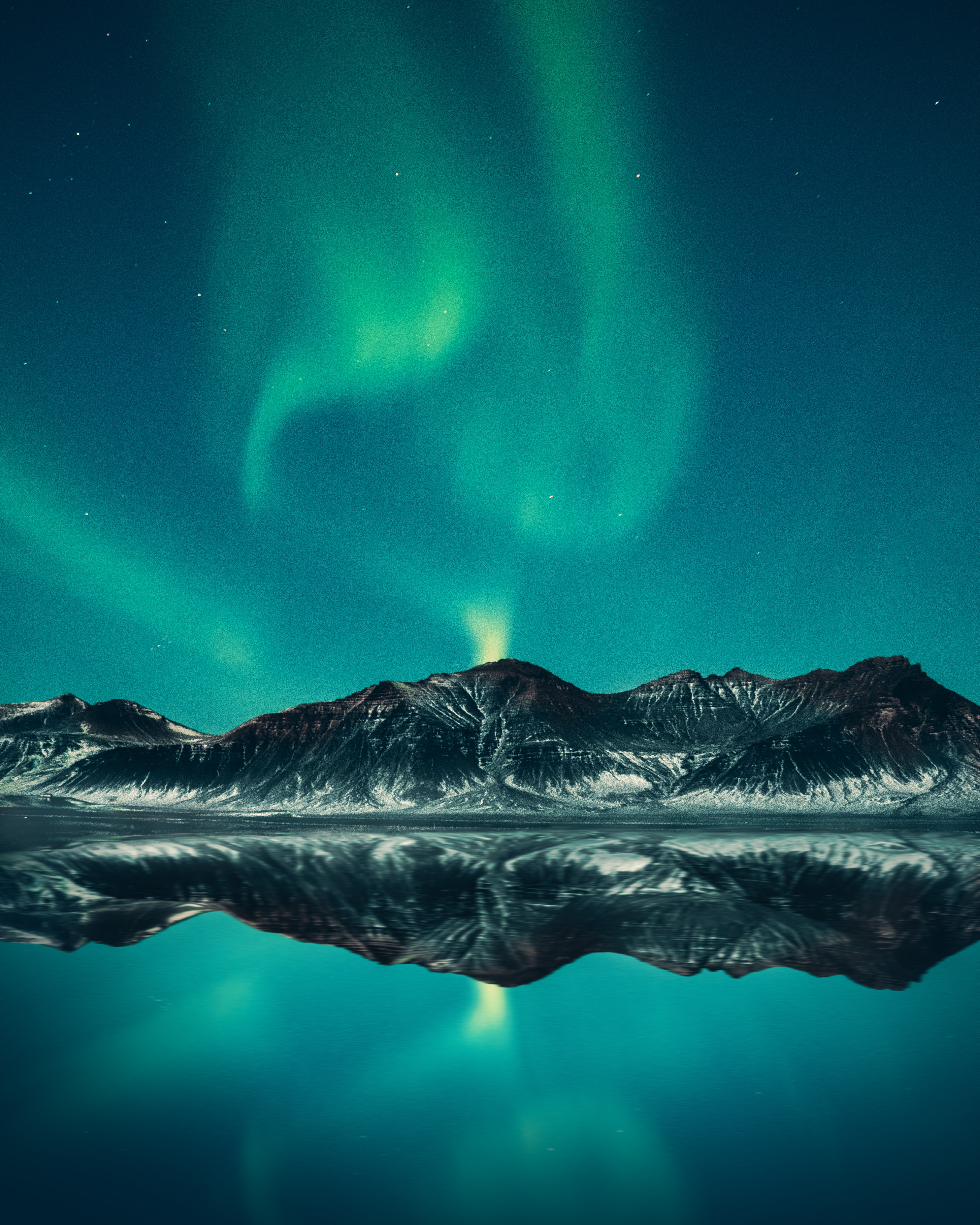
Iceland is one of the best places in the world to see the Northern Lights, and there are a few ways to do it with us: on a small group tour, on an independent trip based in Reykjavík, or on a private journey of your own. The season runs from late September to early April, when the nights are long and dark enough for the aurora to show. The lights can never be promised, so the surest approach is to travel in season, give yourself several nights, and stay somewhere you can reach dark, clear skies.

Ways to see the Northern Lights in Iceland
Small group tour
Our six-day small group tour, Icelandic Lights, travels from Reykjavík through the Golden Circle and along the south coast to the glacier country around Jökulsárlón, with three evenings set aside for guided Northern Lights searches, on foot and by coach. You stay with the same guide and small group throughout, so the driving and the planning are taken care of and you can watch the sky rather than the road. It runs from October to March and ends with a soak in the Blue Lagoon.
Independent trips from Reykjavík
If you would rather travel at your own pace, we have several winter trips based in Reykjavík where everything is arranged for you, your accommodation, transfers and a series of guided day and evening tours, which you join as an individual rather than as part of a set group. Fire, Ice and the Blue Lagoon is a five-day trip with a Northern Lights focus, South Iceland Landscapes and Northern Lights spends six days in the south of the island, and Golden Circle and Northern Highlights is our longest at seven days.
A private journey
For a trip that is yours alone, the Premium Private Iceland adventure spends six days seeking the aurora with private guiding, at a more personal pace.
Wherever you stay, be ready to take part. If you are not booked on an evening tour and the sky clears, step outside and look up.
A soak at the Blue Lagoon
The Blue Lagoon is an easy addition at the start or end of a trip, since it sits close to Keflavík International Airport, and it features on our Icelandic Lights tour. It is open year-round, though in the aurora season the hours are shorter than in summer, running roughly 08:00 to 22:00 from late August to the end of January and 08:00 to 20:00 from February onwards, with guests asked to leave the water shortly before closing. Entry must be booked in advance, as walk-ins are not accepted.
For dinner, Lava Restaurant serves Icelandic cooking inside an 800-year-old lava cliff beside the water, and the Retreat's Moss Restaurant holds a Michelin star under chef Aggi Sverrisson. One note of realism on the lagoon and the lights: the aurora can appear above the lagoon on a clear night, but it closes before the darkest hours and the sky still has to cooperate, so treat a soak as a relaxing bookend to the trip rather than a reliable place to see the lights.
The Blue Lagoon is on the Reykjanes peninsula, which has seen volcanic activity and occasional closures since 2023, so it is worth checking it is operating before you book.

Frequently asked questions
What is the best time to see the Northern Lights in Iceland?
Late September to early April, with the strongest odds from about October to March, when the nights are longest and darkest.
How many nights do you need?
Allow several nights rather than one or two. The sky has to be both dark and clear, so more nights give you more chances.
Can you see the Northern Lights from Reykjavík?
Occasionally, on active clear nights, but the city's light pollution washes out weaker displays. Guided evening tours take you out to darker skies for a better chance.
What's the difference between a small group tour and an independent trip?
On a small group tour you travel with the same guide and group throughout, following one itinerary together. On an independent trip everything is organised for you, your accommodation, transfers and guided day and evening tours, but you join those tours as an individual and keep more flexibility over your days.
Are the Northern Lights guaranteed?
No. The aurora is a natural event that depends on darkness, solar activity and clear skies on the night. Travelling in season and allowing several nights is how you improve the odds.
Plan your trip
Browse our Northern Lights tours, or get in touch and our specialists will help match the season, the route and the way you like to travel.
About the author
Jayde Kincaid is the co-founder of 50 Degrees North, which she built with her Norwegian husband out of a love for his homeland. Australian by birth, she has lived, worked and travelled extensively across the Nordic region, and after 15+ years in outdoor education, leading tours around the world, she has spent much of the last two decades exploring the north on the ground. She writes on the company's story and its approach to Nordic travel. Read more about Jayde Kincaid.