
Our favourite Viking destinations in Scandinavia

A guide to real Viking sites across Norway, Denmark and Sweden, from ship museums to a living Viking village.
The Viking Age left more physical evidence in Norway, Denmark and Sweden than almost anywhere else, from full-scale ship reconstructions to the burial mounds where they were found. This guide covers our favourite Viking destinations across Scandinavia, each one easy to build into a wider itinerary, plus a note at the end on Iceland, which isn't part of Scandinavia but is often paired with a Nordic trip regardless.
Viking history is more than raids and longships, though that's usually where people start. These Scandinavian seafarers traded as far as Baghdad and the Caspian Sea along the eastern river routes, and crossed the Atlantic to Canada centuries before Columbus, making them the first Europeans known to reach American soil. They were also skilled poets, craftsmen and lawmakers, settling disputes at open-air assemblies called things, an early form of collective governance among free men. Much of what we know about their daily lives comes from grave goods: thousands of objects survive from the Viking Age, conventionally dated from the Lindisfarne raid in 793 AD to the Battle of Stamford Bridge in 1066.
Here are some of our favourite places to see that history up close.
Norway
A good starting point for Viking history is in Norway, home to the largest concentration of sites on this list.
Lofotr Viking Museum, Lofoten
A reconstructed chieftain's longhouse in Borg forms the centre of this museum, with costumed guides, a working forge and Viking boats you can row yourself. It's easy to reach as part of a wider visit to Lofoten. Its family-friendly Viking festival, usually held in August, draws crowds for banquets, games and themed events. See Lofotr's own site for festival dates.
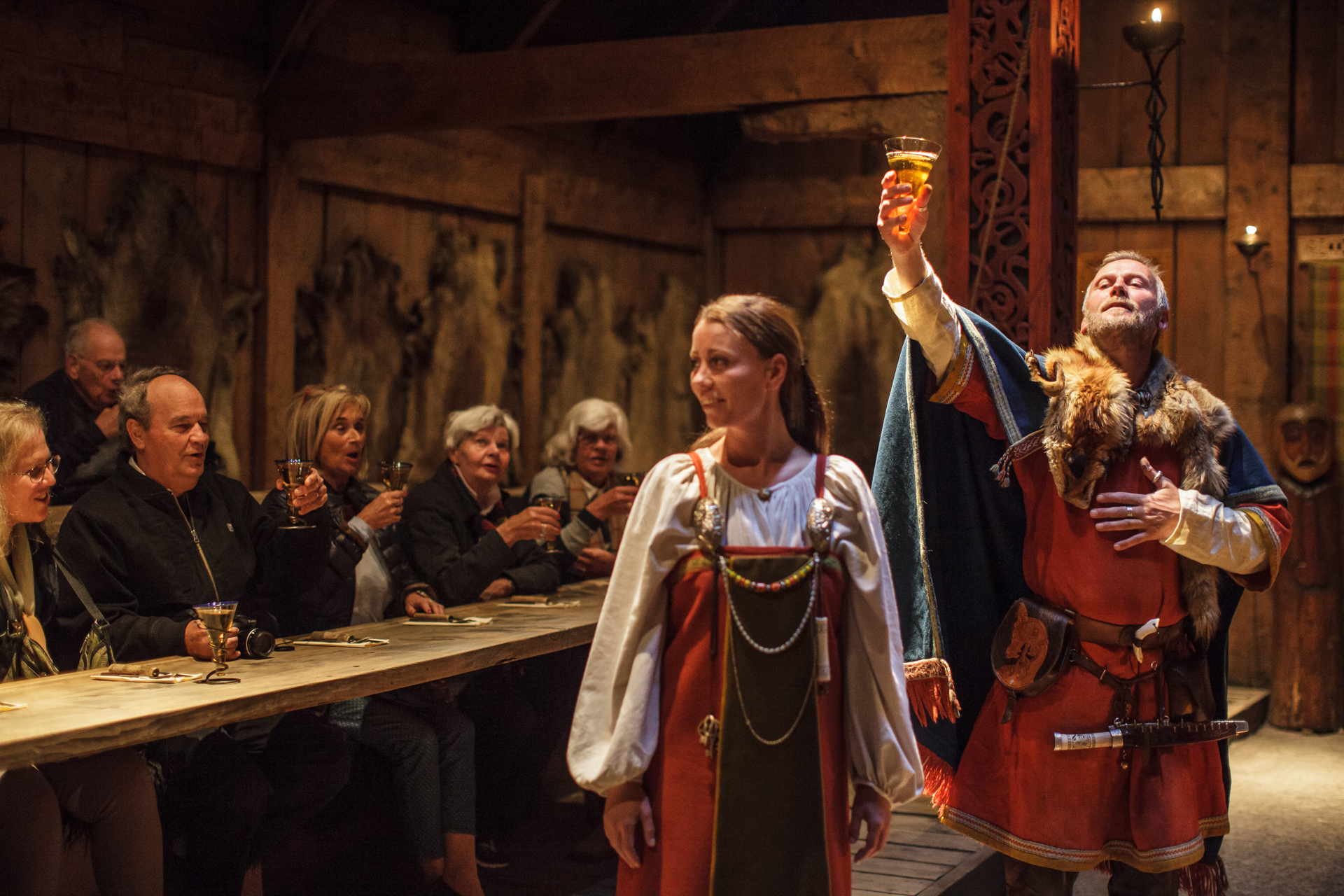
Sagastad Viking Centre, Nordfjordeid
Sagastad, on the fjord in Nordfjordeid, houses a full-scale reconstruction of the Myklebust ship, Norway's largest Viking ship discovery and one of only a handful of ship burials found anywhere in Scandinavia. It's about 55 minutes from Loen. We visit Sagastad on our Scenic Fjords of Norway small group tour. Details are on Sagastad's own site.

Viking Ship Museum, Oslo
On the Bygdøy peninsula, a short trip from central Oslo, this museum holds some of the world's best-preserved Viking ships: the Gokstad, Oseberg and Tune finds, along with sledges, textiles and everyday tools recovered from their burial mounds. It's currently closed for a major rebuild and due to reopen in 2027 as the Museum of the Viking Age. Our local tip still applies while it's closed: walk Bygdøy itself, where locals go for the fjord views and, in summer, fresh strawberries from the roadside stalls.
Njardarheimr Viking Valley, Gudvangen
At the head of the Nærøyfjord, part of the West Norwegian Fjords UNESCO World Heritage area, Njardarheimr is a purpose-built Viking village where the people you meet aren't actors but residents who live the Viking Age as their trade and lifestyle: blacksmiths, weavers and craftspeople working with period tools and recipes. Entry includes a 45-minute guided walk through the village. It's a natural stop on a self-drive or rail-and-fjord route through the Sognefjord region. Details are on Njardarheimr's own site.

Denmark
Roskilde Viking Ship Museum
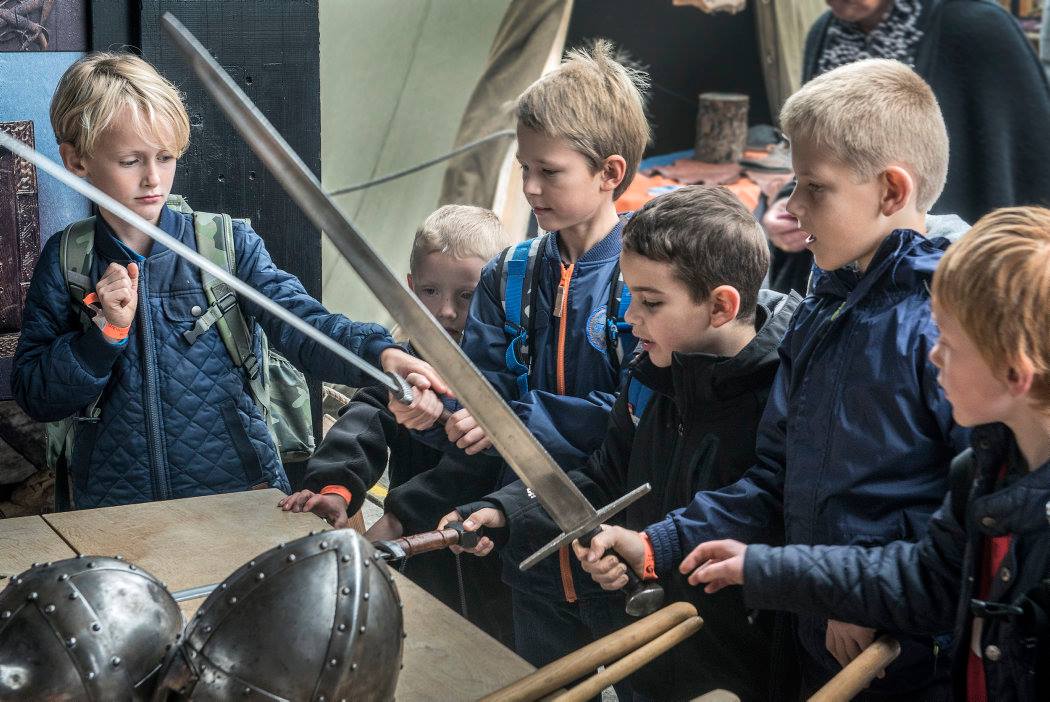
Denmark's Viking Ship Museum brings the era to life for visitors of all ages, with original Viking ships on display in the Ship Hall alongside seasonal events. Dress as a Viking, try the food at the café, row a reconstructed longship or watch the museum's working boatyard. It's a short train ride from Copenhagen, easy to fit into a day trip. See the Vikingeskibsmuseet website for the current schedule.
Ribe Viking Centre
Ribe, on the Jutland peninsula, focuses on a living, hands-on Viking experience, well known for its markets, seasonal Christmas events and craft workshops. Our Denmark's Viking Trail Tour is a self-drive itinerary that visits Ribe, and our Viking tour of Denmark article covers the route in more depth. Details are on the Ribe Viking Centre site.
Viking Museum and Moesgaard, Aarhus
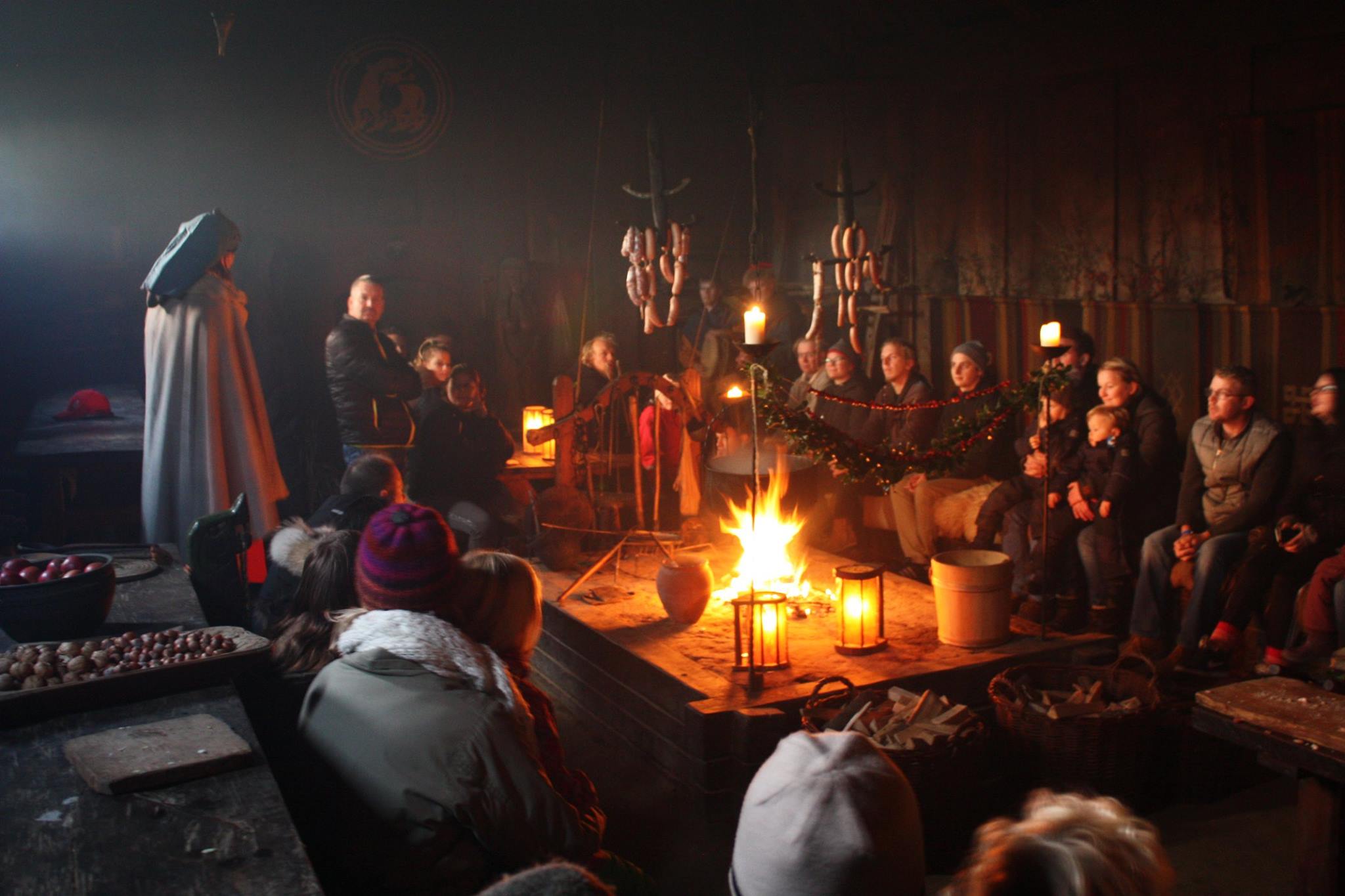
Aarhus grew from the Viking trading town of Aros, and its Viking Museum sits directly on the archaeological dig that proved it, a small, free museum built into the basement beneath a bank in the city centre. For the fuller picture, Moesgaard Museum just south of the city holds the region's main Viking Age exhibition, and hosts an annual gathering of reenactors each late July, now called Moesgaard Vikingedage. Links: the Viking Museum and Moesgaard Museum.
Sweden
The Viking Museum and Aifur, Stockholm
On Djurgården island, The Viking Museum (known locally as Vikingaliv) tells the story of the Viking Age through reconstructed environments, artefacts and the Ragnfrid's Saga ride, guided by staff in Viking-era dress. For dinner, Aifur Krog & Bar in Gamla Stan serves food and mead based on the Viking Age, at long communal tables, by candlelight. Links: The Viking Museum and Aifur Krog & Bar.
Gamla Uppsala
The three Royal Mounds at Gamla Uppsala were raised in the Migration period, centuries before the Viking Age itself, but the site remained one of Scandinavia's most important places of pagan worship and royal power right through it. Gamla Uppsala Museum sits beside the mounds, and the site pairs naturally with a walk to Uppsala Cathedral nearby. Details are on the Gamla Uppsala Museum site.
Iceland
Iceland isn't part of Scandinavia, but it's the destination people ask about most once they've caught the Viking bug, and it's easy to add to a Nordic trip.
Viking heritage across Iceland
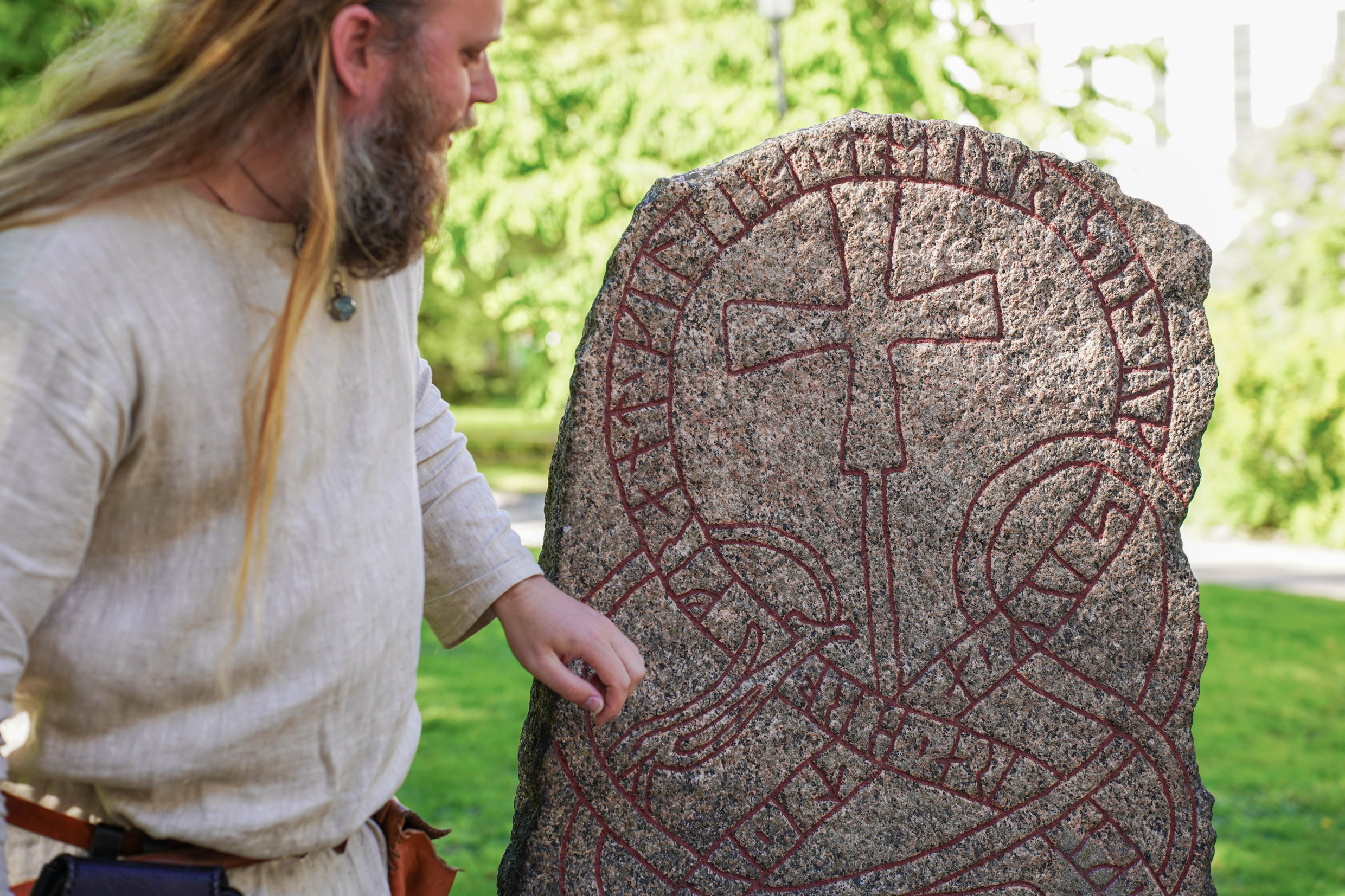
Iceland has few standing Viking sites, but its heritage runs through the language itself, still close to the Old Norse spoken by the Norwegian settlers who arrived in the ninth century. Windswept beaches, volcanic highlands and old traditions such as building stone cairns along mountain routes give the place a sense that a Viking might appear round the next headland. You can bathe in geothermal pools much as they did, or visit Hotel Viking in Hafnarfjörður, where the restaurant Fjörukráin serves a Viking-style feast year-round and the town hosts Iceland's oldest Viking festival each June.
For something more playful, a Viking-costume photo shoot at a Reykjavik studio has become a favourite with visitors of all ages. In Reykjavik, a theatre show dedicated to the Icelandic sagas tells the history aloud for visitors who want it that way.

Frequently asked questions
Is the Viking Ship Museum in Oslo currently open?
No. It closed in 2021 for a major rebuild and is due to reopen in 2027 as the Museum of the Viking Age. Until then, the ships themselves are in conservation and not on public display anywhere in Oslo.
Is Iceland part of Scandinavia?
No, Scandinavia refers to Norway, Sweden and Denmark. Iceland is part of the wider Nordic region and shares deep Viking-era roots with Scandinavia, which is why it's often added to a Scandinavian itinerary even though it isn't technically part of it.
Where can I see real Viking ships, rather than reconstructions?
Roskilde's Viking Ship Museum holds five original excavated ships, the Skuldelev finds. Oslo's Gokstad, Oseberg and Tune ships are also originals, though they're in conservation storage until the museum reopens in 2027. Sagastad, Njardarheimr and Lofotr all display full-scale reconstructions built from archaeological evidence, not the original vessels.
What's the difference between Njardarheimr and Lofotr?
Njardarheimr, in Gudvangen, is a living Viking village staffed by people who practise Viking-era crafts and trades as a way of life, in western Norway's fjord country. Lofotr, far north in the Lofoten islands, is a museum built around a reconstructed chieftain's longhouse, with a summer festival rather than a resident community. Both are worth visiting, but for different reasons, and they aren't substitutes for each other.
Which of these sites suit young children?
Njardarheimr, Ribe and the Viking Museum in Stockholm are built with families in mind, with hands-on activities, workshops and a ride designed for children. Aarhus's Viking Museum is small and mostly text and artefact based, so it tends to suit older children with more interest in history.
How many days should I set aside to see Viking sites?
These generally aren't worth a dedicated Viking-only trip. Most sit inside or near cities already on a Scandinavian itinerary: Roskilde is a short train ride from Copenhagen, the Viking Museum sits in Stockholm itself, and Gudvangen is on the route between Bergen and the fjords. They fit naturally into time already being spent in those places, rather than needing extra days added on.
Do I need to book tickets in advance?
For most of these sites, no. The exceptions are around festival dates, Lofotr's August festival and Moesgaard's Vikingedage in July both draw large crowds, and the Viking Museum's Ragnfrid's Saga ride in Stockholm is worth booking ahead in peak summer.
Are these sites accessible for visitors with limited mobility?
It varies. Njardarheimr has good wheelchair access across the site, though some of its smaller historic buildings have high thresholds. Museum-based sites such as Roskilde, Oslo (once reopened) and Stockholm are generally fully accessible, being indoor and purpose-built. Worth checking directly with a site if mobility is a concern, since provision differs.
Can these Viking sites be visited outside summer?
Most of them, yes. Sagastad, Ribe, Roskilde, the Viking museums in Aarhus and Stockholm, and Njardarheimr all operate year-round, though rowing activities and markets are seasonal. Lofotr's festival, Moesgaard's Vikingedage and Hafnarfjörður's Viking festival are all summer events, so visit these for the exhibitions rather than the festival atmosphere if travelling outside June to August.
Is there a Viking festival worth planning a trip around?
Yes, several. Lofotr's festival (usually August), Moesgaard's Vikingedage near Aarhus (last weekend of July), and Hafnarfjörður's Viking Festival in Iceland (mid-June) are the three best-established. Each draws genuine reenactor communities rather than a one-off tourist show.
About the author
Satu Vänskä-Westgarth is Director of Product at 50 Degrees North. Finnish, and living in Norway for close to 20 years, she has worked across the travel industry from raft guiding and travel writing to product strategy, and designs the company's Nordic journeys around authentic, local experiences. A keen photographer, she travels widely across the north, from Lofoten to the Faroe Islands and Greenland. Read more about Satu.
Image credits: Kjell ove storvik / Lofotr Lofotr Viking Museum, Sagastad Museum, Emmie Bolmstedt | imagebank.sweden.se, Inspired by Iceland.