

Scandinavian Travel - Our Recommendations for Great Reads
Before departure, or while dreaming of a Scandinavian adventure, get your fill of inspiring travel books here.
10 days | Independent | May-Sep | Helsinki to archipelago coast to the lakes
Finland's coast holds the world's largest archipelago by number of islands, where the Baltic reaches almost halfway around the country to the west and south. It is one of the largest brackish seas in the world, its water carrying a salinity of less than one per cent against the roughly three and a half per cent of the open ocean. For centuries these shores have been lined with small fishing towns and villages, many of them home to Finland's Swedish-speaking communities.
The clearest way to read Finland's past is to follow its water. The fortresses, castles, manor houses and ironworks that mark the Swedish and Russian centuries were built where the waterways ran, along the Baltic and the inland lakes, because that was how people and goods moved. This route traces that line from the sea to the lake district, and ends where the country's national identity was painted, composed and written into being.
It also pairs naturally with our second Finnish self-drive, Green Forests & Blue Lakes, if you want to carry the journey east.

As a Certified B Corporation, 50 Degrees North has designed this tour using handpicked local hoteliers and suppliers who share our ethos of delivering services and activities of high social and environmental standards.
The CO2-e per person per day of all tours is carefully measured following each season. We fully offset all emissions of our tours on your behalf, and we constantly look at ways to reduce emissions where possible.
Self-drive itinerary with hire car. Pick up and drop off is in Helsinki, either at the airport or city centre.
Automatic cars are available on request but can be hard to secure, so please ask us for advice, along with any hotel upgrades or optional add-ons. The tour can also be shortened by returning to Helsinki after the Day 9 bike ride, or by dropping a day in Turku. Just let us know and we will tailor it.
Collect your hire car in Helsinki and head west to Fiskars. This is old ironworks country, where Finland's manufacturing first took shape, and villages like these once ran as self-contained worlds with their own schools, churches and hospitals. Fiskars itself was founded in 1649 and made cast and forged iron here until the 1980s. Most of the buildings date from the early 19th century, set along two sets of rapids on the Fiskars River and designed by some of the notable Finnish architects of the day.
When the industry moved on, the setting drew a different kind of maker. By the 1990s a group of artists, designers and craftspeople had settled here and formed a cooperative, which now counts more than a hundred members across most fields of art, craft and design. Wander the studios and shops and stop for lunch in one of the cafes. We can arrange a private guided walk if you would like the history and the workshops explained by a local.
Continue to Mathildedal, another old ironworks village of red and white timber houses and former factory buildings, set in parkland near the sea. Your hotel occupies a refurbished industrial building. Settle in, take afternoon tea, and let the evening run long, since even here on the southern coast the summer nights barely darken.
After a breakfast of local produce, take the self-guided nature walk into Teijo National Park, a few hundred metres from the hotel, where Finland's landscape appears in miniature: small lakes, forest, marsh, streams and the sea.
Drive on towards Turku, European Capital of Culture in 2011. On the way, the island of Hirvensalo is worth a stop for St Henry's Ecumenical Art Chapel, completed in 2005 and known as the Fish Chapel for its shape. Its architect, Matti Sanaksenaho, is known for exactly this kind of sculptural timber form. A private tour with a short organ recital can be arranged if you want more from the visit.
Arrive in Turku in the late afternoon.
Explore Turku's main sights with a private guide, starting at Turku Castle. The Swedes secured their hold on Finland through three crusades, each followed by a castle built to defend and to govern. Turku Castle went up in the 1280s at the mouth of the River Aura, in the period when the name "Finland" still meant only the south-western settlements around it.
Continue to the Luostarinmäki Open-Air Museum. The Great Fire of 1827 destroyed most of Turku's wooden town, but Luostarinmäki was spared, and its houses and workshops still stand exactly where they were built across 18 small plots. It is an unusually direct way to see how ordinary people lived and worked in the 1800s.
Walk on to Turku Cathedral, the most important medieval church in Finland and the setting for much of the nation's history. Its side chapels hold the tombs of Swedish war heroes and of Karin Månsdotter, once queen of Sweden. Afterwards, lunch at one of the cafes along the Aura.
The day is yours. Your Museum Card opens the rest of Turku's collections, or you can hire one of the small electric boats on the Aura, easy to handle, licence-free and supplied with route maps, for a picnic or an evening on the water. A local skipper can come along if you would rather have the company.
For a half-day out, Naantali sits a short drive away, an old wooden town built around a medieval convent church. Nearby, the gardens of Kultaranta, the president's summer residence, open for guided visits in summer. Tell us if you would like either arranged.
Head north towards the Gulf of Bothnia and Rauma, chartered in 1442 and known in Finland for three things: its old wooden houses, a dialect no other Finnish speaker can follow, and its bobbin lace.
Old Rauma is the largest unified wooden town in the Nordic countries and was added to the UNESCO World Heritage List in 1991. Its medieval street pattern survives in the narrow, winding lanes and irregular plots, and its nearly 30 hectares hold around 600 buildings, most still privately owned and lived in. The Rauma dialect carries vocabulary picked up by seafarers from across the world, and clips its word endings; you will see it on shop signs and hear it in the market square. Lacemaking here reaches back to the 18th century, and the Rauma Lace Week each July still crowns the town's fastest lace-maker.
Meet your guide at the Information Centre for a 90-minute walk through Old Rauma, taking in the late-15th-century Church of the Holy Cross, once part of a Franciscan monastery, with its medieval wall and vault paintings (subject to availability). The walk ends at the Maritime Museum, where you are free to explore the town's seafaring past.
About 20 km on towards Tampere, stop at Sammallahdenmäki, a Bronze Age burial site added to the UNESCO list in 1999, the first prehistoric site in Finland to be inscribed and home to some of the finest burial cairns in the Nordic region.
Arrive in Tampere, on Lake Näsijärvi, in the late afternoon.
Tampere was founded in 1779 by Gustav III of Sweden, on the banks of the Tammerkoski rapids, and it has been an industrial pioneer ever since. One of Finland's early paper mills, the Frenckell works, began operating here in 1783, and the cotton factory that James Finlayson established in 1820 grew into the country's first large-scale industrial enterprise. The first electric light in the Nordic countries was lit in Finlayson's halls in 1882.
For a city of more than 200,000, Tampere keeps a small-town ease. It sits on a narrow neck of land between two lakes, the rapids and their red-brick mills at its centre and glacial ridges rising on either side.
A local guide leads you on foot through the old industrial quarter and the mixed old-and-new centre, then up to Pispala, a district on the slope of an ancient esker. Once home to railway and factory workers and a byword for hard living, it is now one of the city's most sought-after addresses, its narrow lanes and restored wooden houses looking out over both lakes. The walk continues through the protected Pyynikki forest to the observation tower, where a family-run café has been serving its well-known doughnuts for generations, and the view rewards the climb.
Take a slow morning in Tampere before heading to the pier for a two-hour lunch cruise. The lakes are best understood from the water, and the buffet leaves you free to watch the shoreline pass.
Afterwards, if you are drawn to art, the Sara Hildén Art Museum sits on Lake Näsijärvi, its collection of around 5,000 modern and contemporary works, Finnish and international, framed by large windows and a sculpture-dotted lawn running down to the water.
Any glass a Finnish friend gives you is likely to carry a small red dot with a white "i", the mark of Iittala, and one you never peel off. The glassworks was founded in the village of Iittala in 1881 and still runs today, turning out Alvar Aalto's Aalto vase and Oiva Toikka's glass birds. You can watch the glassblowers at work (the factory closes in July).
Drive south to Hämeenlinna, where the medieval Häme Castle stands on the shore of Lake Vanajavesi. Work seems to have begun in the 1290s, after the second Swedish crusade, as part of a defensive line against Novgorod, though the peace of 1323 left it well behind the border. Above the ground floor it is built entirely of brick, which sets it apart from Finland's other stone castles. Jean Sibelius was born in Hämeenlinna and spent his first twenty years here; his birthplace, now a museum, stands in the town centre.
The Aulanko forest park is also worth the time. Its granite lookout tower, shaped like an old castle keep, opens onto the valley of Lake Vanajavesi, a view that drew Finnish landscape painters and, by long tradition, is said to have moved Sibelius as he worked on Finlandia.
Carry on south towards Helsinki and two nights at Krapi Estate on Lake Tuusula. In the Holma family since 1911, first a dairy farm and now a hotel, Krapi keeps old Finnish culinary traditions in an 1883 villa, with its own smokehouse, butchery and bakery, and the menu shaped by the seasons. Rooms occupy the converted cattle stables, there is a golf course, and a traditional smoke sauna waits by the lake. Dinner tonight is at Restaurant Krapihovi.
Circle Lake Tuusula by bicycle today, an easy ride over flat ground. The full loop runs about 26 km, but the first of the day's stops comes after only five, and on the rural western shore it is hard to believe Helsinki lies just 30 km away. We include three cultural visits, with more along the way to take in as you please, and can pack a picnic lunch if you would like one.
This shore mattered deeply to Finland's artists, authors and composers, who found their material in the quiet countryside. Your first stop is Halosenniemi, the log-built studio home of Pekka Halonen, one of the best-loved painters of Finland's golden age, completed in 1902 in the National Romantic style. Next is Ahola, where the author Juhani Aho, regarded as Finland's national writer, and the painter Venny Soldan-Brofeldt settled in 1897 and drew the artists' colony into being. Last is Ainola, the timber villa Lars Sonck designed for Jean and Aino Sibelius, their home from 1904 to the end of their lives, far enough from the capital for the composer to work and close enough to good company.
Dinner is at your hotel, your last night in the countryside.
On the way back to Helsinki, the Gallen-Kallela Museum is worth the stop. The castle-like studio and residence at Tarvaspää was designed and built by Akseli Gallen-Kallela (1865 to 1931) and opened to the public in 1961. More than any other figure, Gallen-Kallela shaped the Finnish national style in art, and he reached the wider public as the illustrator of two cornerstones of Finnish literature, the Kalevala and Aleksis Kivi's Seven Brothers. Its temporary exhibitions set his work alongside that of his contemporaries and artists working today.
Return your hire car in Helsinki, or carry the journey east: this tour joins our Green Forests & Blue Lakes self-drive, in which case you drive on to Porvoo for the night and pick up that itinerary the next morning.
All prices listed are per person, based on two people sharing a room. Prices are indicative.
Please ask us for hotel upgrades and optional add-ons. You can also shorten this tour by returning to Helsinki after your bicycle tour on Day 9 or having one less day in Turku. Please ask us to custom make this tour accordingly.
IMPORTANT NOTE: Weather conditions may occasionally affect certain activities, and as a result, the schedule may be adjusted to ensure the best possible experience for all guests. For multi-activity stays, often the order of the activities will be confirmed locally on arrival. Activities might vary slightly in their duration or location due to the weather and local conditions. Any activities that are unable to be re-scheduled due to weather conditions, will be refunded as a general practice, as determined by the activity provider.


Before departure, or while dreaming of a Scandinavian adventure, get your fill of inspiring travel books here.
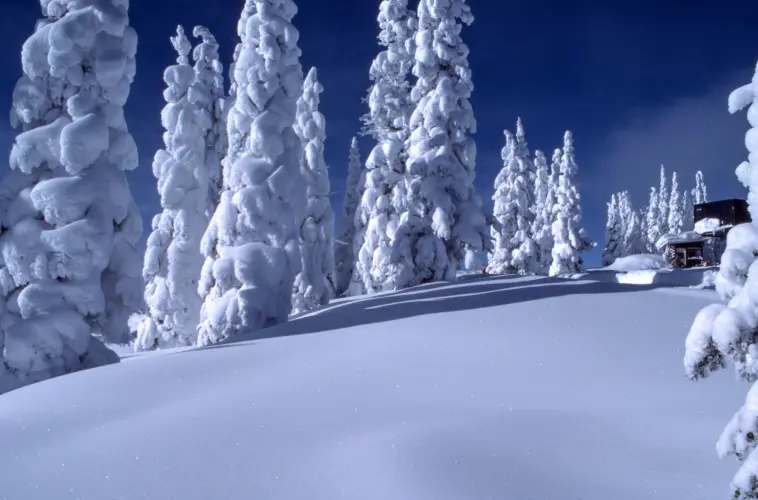
Sir David Attenborough's latest BBC series 'The Green Planet" re-visits the taiga forests of Finland. This subarctic forest lies just south of the Arctic Circle and is a playground for hikers, bikers, and boaters, in summer and winter.

Midnight sun and sauna, the perfect ingredients to celebrate Midsummer in Finland.
Travel insurance is compulsory for all tours with 50 Degrees North. The safety of our travellers, staff and operators is a major priority of 50 Degrees North. With an operational office in Norway, 50 Degrees North has access to an up-to-the-minute flow of information regarding the countries we work in. We are also in regular contact with the various operators we use. Their in-depth knowledge and understanding of their various areas is vital.